
Nepal's Premier Yoga Destination
Why Pokhara for Yoga?
The complete case for Pokhara — mountain views, clean air, peaceful environment, year-round weather, and an honest comparison with Kathmandu.
The Perfect Setting for Yoga
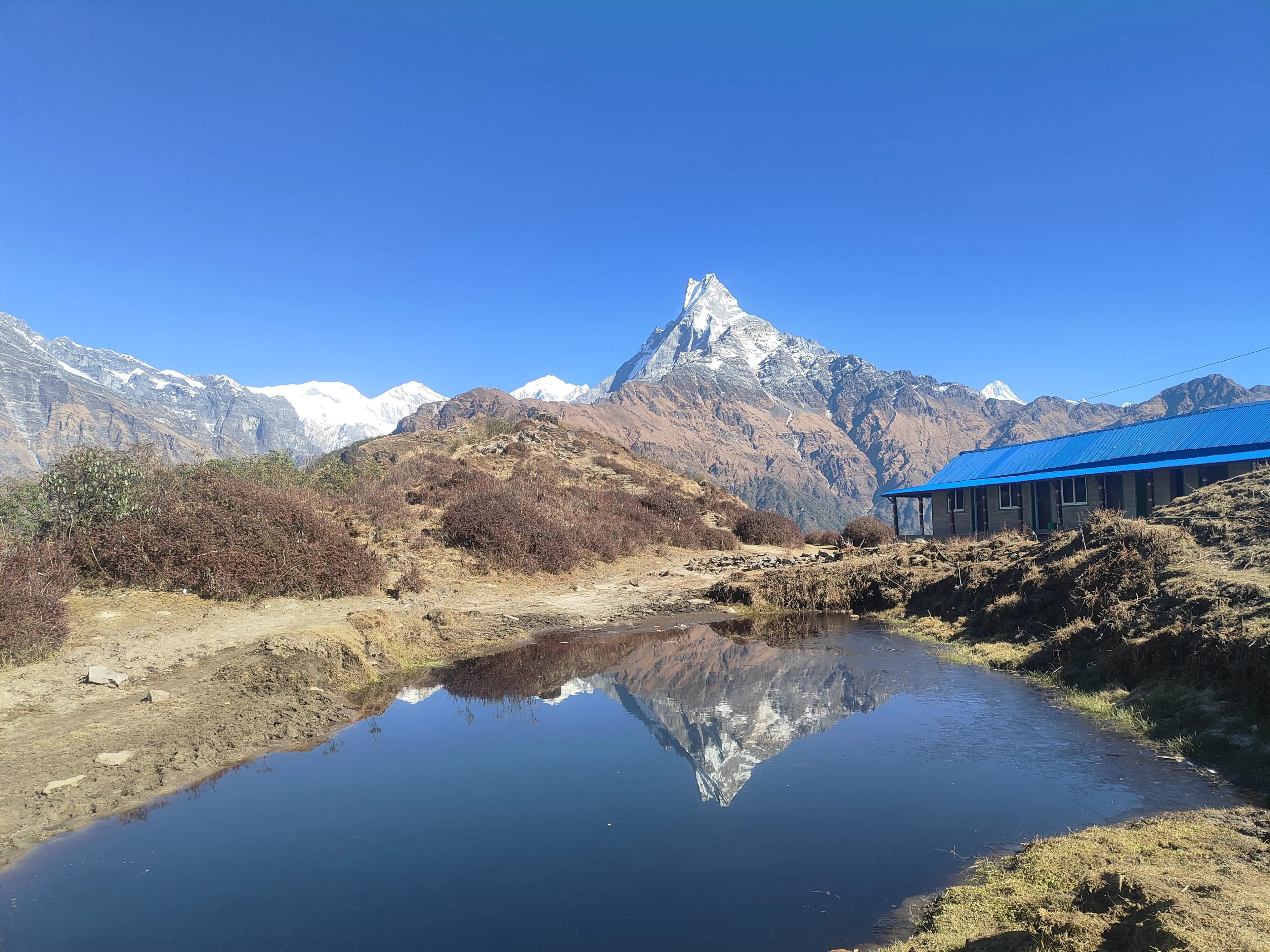
Pokhara sits in a valley surrounded by the Annapurna range, with direct views of some of the world's highest peaks. This isn't just beautiful scenery - it's an environment that supports deep practice. Clean mountain air for pranayama, natural quiet for meditation, and the inspiring presence of the Himalayas.
Unlike Kathmandu's urban intensity or tourist-heavy areas, Pokhara maintains a peaceful atmosphere that yoga practice requires. The city is large enough to have good infrastructure but small enough to feel tranquil.
At 827 meters elevation, Pokhara offers a comfortable altitude for practice - high enough for clean air and mountain energy, low enough to avoid altitude challenges. The valley microclimate creates mild temperatures year-round, making outdoor practice possible even in winter months.
Quick answer: For 90% of practitioners — especially those seeking focused practice, teacher training, or transformative retreats — Pokhara is clearly the better choice. Choose Kathmandu only if urban convenience outweighs all other factors.
What Makes Pokhara Special
Mountain Views
Direct views of 10 major peaks: Annapurna I (8,091m), Machhapuchhre/Fishtail (6,993m), Dhaulagiri (8,167m), Nilgiri (7,061m), Annapurna South (7,219m), Hiunchuli (6,441m), Lamjung Himal (6,983m), and Annapurna II-IV. Practice yoga with the world's highest mountains as your backdrop.
Clean Air
Unlike Kathmandu's pollution (AQI often 150+), Pokhara maintains clean mountain air (AQI typically 20-50) essential for pranayama and overall health. No smog, no vehicle exhaust - just pure Himalayan air.
Peaceful Environment
Lakeside has tourist activity, but areas like Ghachowk (20km from city, 1,200m elevation) offer genuine village peace perfect for retreats. No tourist bars, no traffic noise, just village life and mountain views.
Perfect Climate
Mild temperatures year-round. Average: Summer 25-30°C, Winter 10-20°C. Best weather October-November (post-monsoon clarity) and March-May (spring warmth), but comfortable always. Rarely too hot or too cold for practice.
Easy Access
Direct flights from Kathmandu (25 min, ~$100-150) fly 6-7 times daily. Scenic tourist bus option (6-7 hours, ~$10-20) through mountain scenery. International connections via Kathmandu (30+ airlines). Visa on arrival for most nationalities.
Trekking Gateway
Starting point for Annapurna Circuit, Annapurna Base Camp, Poon Hill, Mardi Himal treks. Unique opportunity to combine yoga practice with Himalayan trekking - 5-day Yoga & Trek programs available. Only in Nepal can you do yoga at 3,000m altitude.
Pokhara vs Kathmandu: The Complete Comparison
| Factor | Kathmandu | PokharaWinner |
|---|---|---|
| Mountain Views | Limited/blocked by buildings | Direct Annapurna range views✓ |
| Air Quality | Polluted (AQI 100-200+) | Clean mountain air (AQI <50)✓ |
| Noise Level | Very high (traffic/horns) | Peaceful (especially Ghachowk)✓ |
| Natural Setting | Concrete jungle | Lakes, forests, nature✓ |
| Focus for Meditation | Many distractions | Meditation-friendly✓ |
| Studio Quantity | Many (30+)✓ | Fewer (10+) |
| Studio Quality | Variable | Generally higher✓ |
| Authenticity | More commercial | More authentic✓ |
| Tourist Crowds | Very crowded | More manageable✓ |
| Trekking Access | Limited | Gateway to Annapurna✓ |
| Accessibility | International airport✓ | Domestic flight/bus |
| Cost | Slightly lower | Competitive |
Mountain Views
Air Quality
Noise Level
Natural Setting
Focus for Meditation
Studio Quantity
Studio Quality
Authenticity
Tourist Crowds
Trekking Access
Accessibility
Cost
Our Verdict
Pokhara wins on almost every factor that matters for yoga practice. The only advantages Kathmandu offers — more studio options and international airport — are minor compared to Pokhara's clean air, mountain views, peaceful environment, and authentic atmosphere.
Why These Factors Matter for Yoga
1Mountain Views: The Visual Foundation
In Kathmandu, mountains are largely invisible. Buildings block sight lines, and pollution creates haze even on clear days. You might catch distant glimpses from certain rooftops, but mountain views are not part of daily life.
In Pokhara, the Annapurna range dominates the skyline. Machhapuchhre (Fishtail Mountain) is visible from almost everywhere. You can literally practice yoga watching sunrise illuminate 8,000-meter peaks. This isn't just aesthetic - the presence of sacred mountains creates tangible spiritual energy.
Winner: Pokhara (massively) - This factor alone justifies choosing Pokhara for many practitioners.
2Air Quality: Essential for Pranayama
In Kathmandu's air pollution, is serious. AQI (Air Quality Index) readings of 100-200 are common; during bad periods, it exceeds 300. This affects not just comfort but health - and makes pranayama (breath work) counterproductive. You're literally breathing in harmful particles during what should be cleansing practice.
In Pokhara's mountain air, is dramatically cleaner. AQI typically stays under 50. Fresh Himalayan breezes carry clean air from higher elevations. Pranayama becomes what it should be - a purifying practice with genuinely fresh air.
Winner: Pokhara (significantly) - For any practice involving breath work, this is non-negotiable.
3Noise Level: Supporting Deep Practice
In Kathmandu is loud., Constant traffic, honking horns, construction, street vendors, temple bells, urban chaos. Even in quiet studios, the city's soundscape infiltrates. Meditation sessions compete with external noise. Finding true silence requires expensive soundproofing.
In Pokhara is peaceful, , and areas like Ghachowk even more so. Rural locations offer village quiet - bird songs, occasional dogs, natural sounds. The silence supports meditation rather than fighting against it. Peace isn't manufactured; it's the natural environment.
Winner: Pokhara - Especially in rural locations like Ghachowk.
4Natural Environment: Beyond the Studio
In Kathmandu, is a concrete jungle. Green spaces are limited, and reaching nature requires significant travel. Your practice exists in an urban context - stepping outside means streets, shops, crowds.
In Pokhara, is surrounded by nature. Phewa Lake, surrounding forests, rice terraces, mountain trails - all within easy reach. Outdoor practice is genuinely possible. The natural environment supports and extends your yoga experience beyond studio walls.
Winner: Pokhara (massively) - Nature immersion is integral to authentic yoga.
Pokhara Weather: What to Expect Year-Round
Pokhara sits at approximately 800-1,100 meters elevation (higher in Ghachowk), giving it a subtropical highland climate. This means warm days, cool nights, and distinct seasons. Unlike tropical Bali or the hot plains of India, Pokhara offers comfortable temperatures for yoga year-round.
The main weather factor is the monsoon (June-September), which brings heavy rain but also lush landscapes. Outside monsoon, weather is generally pleasant, with autumn (October-November) offering the clearest mountain conditions of the year.
Ghachowk sits about 300m higher than Lakeside Pokhara, meaning slightly cooler temperatures and often clearer views.
Seasonal Weather for Yoga
Autumn (October-November)
ExcellentPerfect yoga weather. Clear skies, comfortable temperatures, low humidity. Best conditions for mountain views and outdoor practice.
Advantages
- Crystal clear mountain views
- Ideal practice temperatures
- Low humidity for pranayama
- Beautiful festival season
Considerations
- Peak tourist season
- Higher prices
- Book programs in advance
Winter (December-February)
GoodCool but sunny. Cold mornings require warm layers but days are pleasant. Excellent clarity for mountain views.
Advantages
- Clear skies and views
- Fewer tourists
- Lower prices
- Crisp air for pranayama
Considerations
- Cold mornings
- Need warm clothing
- Some may find mornings too cold
Spring (March-May)
GoodWarming weather with blooming rhododendrons. Clear mornings but clouds often build by afternoon. Good balance of weather and availability.
Advantages
- Pleasant temperatures
- Rhododendron blooms
- Good availability
- Clear mornings
Considerations
- Afternoon clouds
- Getting hot by May
- Pre-monsoon humidity rises
Monsoon (June-September)
ChallengingDaily rain, high humidity, limited mountain views. But green landscapes, few tourists, and lowest prices. Rain mostly afternoon/evening.
Advantages
- Lush green scenery
- Very few tourists
- Lowest prices
- Mornings often dry
Considerations
- Daily rain (mainly afternoon)
- High humidity
- Limited mountain views
- Possible travel disruptions
Month-by-Month Guide
January
Cold mornings (5-8°C), clear skies, excellent views
February
Warming slightly, clear conditions, good practice weather
March
Spring begins, pleasant temps, rhododendrons start blooming
April
Warm and pleasant, peak rhododendron season, some afternoon clouds
May
Getting hot (28-32°C), pre-monsoon humidity, occasional storms
June
Monsoon arrives, daily rain, high humidity, limited views
July
Peak monsoon, heavy rain, very humid, views rare
August
Wettest month, flooding possible, best to avoid
September
Monsoon weakening, rain decreasing, still humid
October
Ideal conditions, clear skies, perfect temperatures
November
Best visibility, dry and pleasant, peak season
December
Cold but clear, fewer crowds, good value
Ghachowk: The Hidden Gem
While Lakeside Pokhara has yoga studios, we chose Ghachowk village for its authentic peace. Just 20km from Lakeside but a world away in atmosphere - no tourist bars, no traffic noise, just village life and mountain views.
Ghachowk sits at 1,200 meters elevation in the lower Annapurna foothills. Population ~3,500, traditional Gurung village, with daily bus service to Pokhara. The location offers unobstructed views of Machhapuchhre, Annapurna South, and the entire Annapurna massif.
This is where serious practitioners come when they want more than a tourist yoga experience. The environment itself becomes part of your practice. Morning mist rising from the valley. Bird calls instead of car horns. Prayer flags fluttering in clean mountain wind. Village children walking to school. This is the Nepal that called people to yoga in the first place.
Pokhara Yoga by the Numbers
Including world's 7th and 10th highest mountains
Perfect altitude for practice without altitude sickness
Quick and scenic mountain flight
Clean mountain air vs Kathmandu's 150+ AQI
Post-monsoon crystal clarity for mountain views
Comfortable climate for outdoor practice
The Verdict: When to Choose Each
Choose Kathmandu If:
- You need maximum studio options to browse
- Urban convenience is your priority
- You're only passing through briefly
- You specifically want an urban yoga experience
Choose Pokhara If:
- Mountain views matter to you (they should!)
- You want clean air for pranayama practice
- Peace and focus are essential for your practice
- You're doing teacher training or retreats
- You want authentic yoga, not commercialized wellness
- You might combine yoga with trekking
Common Questions About Yoga in Pokhara
Written by
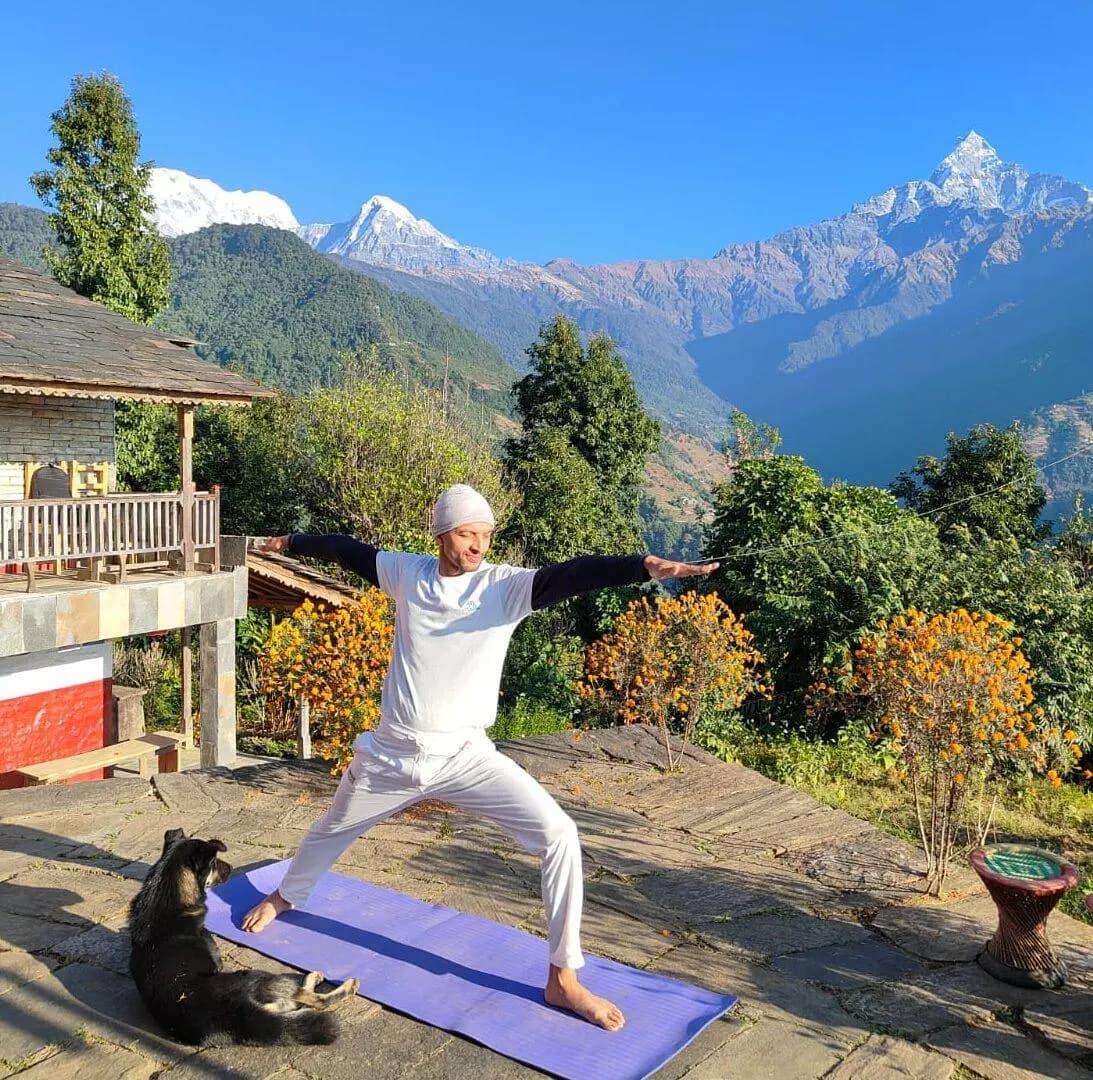
Swami AnandaSwami Ananda is the founder of Yoga in Pokhara, with over 10 years of teaching experience. Trained at ashrams in the Himalayas, he brings authentic yoga traditions to Pokhara, Nepal.
Experience Yoga in Pokhara
Join us in the heart of the Himalayas for authentic yoga practice — clean air, mountain views, and the peace serious practice demands.