
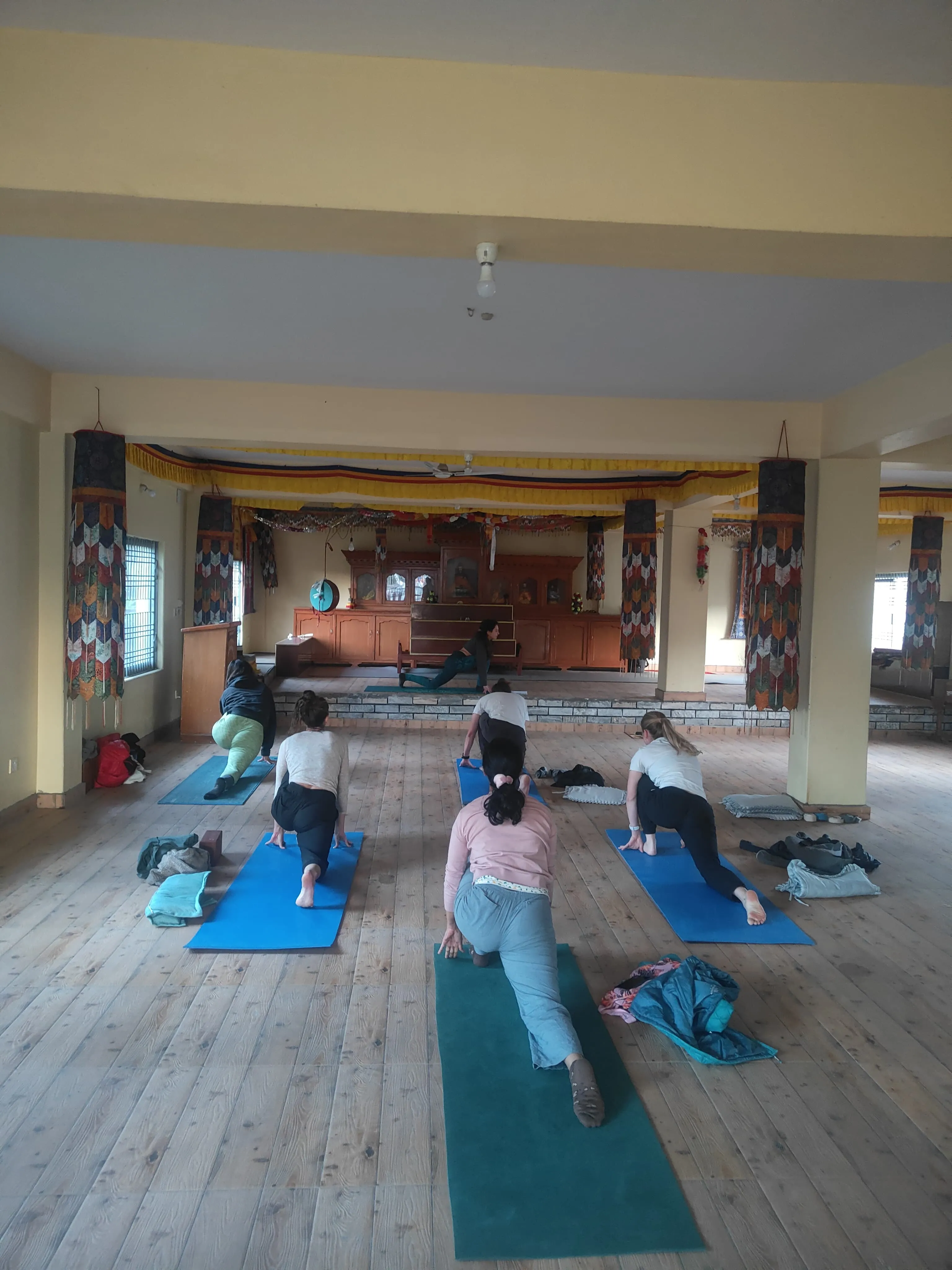
Ancient Wisdom, Sacred Mountains
Traditional Yoga from Himalayan Ashrams
We teach yoga as it has been preserved for millennia in the Himalayas - authentic practice from ashrams where great masters realized these teachings. Not fitness adaptations, but real spiritual tradition.
Traditional Yoga from the Himalayan Tradition
In the Himalayas - from Rishikesh to Mysore, from Bihar to the sacred caves where masters meditated - yoga has been preserved as a complete spiritual science. Our instructors spent years in ashrams in the Indian Himalayas learning directly from teachers who themselves trained in unbroken lineages. This is what makes our yoga different.
Traditional yoga from the Himalayas is not merely physical exercise. It is an integrated system for human development encompassing physical postures (asana), breath work (pranayama), ethical disciplines (yama/niyama), sense withdrawal (pratyahara), concentration (dharana), meditation (dhyana), and samadhi (liberation). Each limb supports the others.
The Himalayan environment has shaped yoga practice for thousands of years. Clean mountain air for pranayama, natural silence for meditation, and the powerful energy of sacred mountains create conditions that transform practice. We bring this Himalayan approach to Nepal's Annapurna region.
Our teachers did not receive weekend certifications. They lived in ashrams, woke before dawn for sadhana (spiritual practice), served their teachers, and absorbed yoga through direct transmission. This depth cannot be packaged or abbreviated - it must be experienced.
Deepen your study of traditional yoga philosophy through the philosophy curriculum within our 200-hour Yoga Teacher Training.
Benefits of Practice
Physical Benefits of Traditional Himalayan Yoga
- Strengthens and tones the entire body through classical asanas
- Improves flexibility and joint mobility safely and progressively
- Enhances posture and alignment, reducing chronic pain patterns
- Boosts immune function through improved circulation and lymphatic flow
- Balances hormones and nervous system through glandular stimulation
- Increases vital energy (prana) through breath work practices
- Improves digestion and elimination through specific postures
- Builds core stability without excessive strain or injury risk
Mental & Spiritual Benefits from Himalayan Tradition
- Calms the mind and reduces stress through pranayama and meditation
- Develops concentration and one-pointed focus (dharana)
- Cultivates emotional balance and resilience through ethical practices
- Deepens self-awareness and introspection
- Connects you to an ancient lineage of wisdom seekers
- Reduces anxiety and depression through systematic practice
- Develops equanimity - steadiness in all situations
- Prepares the foundation for deeper meditative states
What to Bring & How to Prepare
Clothing
Comfortable, modest clothing that allows movement. Traditional practice respects the body - avoid overly tight or revealing attire. Layers for temperature changes.
Food
Practice on empty stomach or light meal 2+ hours before class. No heavy food immediately before. Vegetarian diet supports traditional practice but is not required.
Timing
Arrive 10 minutes early to settle in. Our center follows ashram timing - classes start promptly. Late entry disturbs the sacred atmosphere.
Mindset
Come with openness and respect for the tradition. Leave competitiveness at the door. Traditional yoga is internal, not external - your journey is unique.
What We Provide
Mats, blocks, straps, blankets, and all props. Himalayan tea after class. Clean practice space with mountain views.
Traditional Class Structure from Ashram Tradition
How We Structure Sessions According to Himalayan Methods
Centering & Invocation (5 minutes)
Begin with grounding and sometimes chanting "Om" to honor the tradition. Creates sacred space and transitions mind from external to internal.
Pranayama - Breath Work (10 minutes)
Specific breathing techniques to purify nadis (energy channels) and balance nervous system. Foundation for all subsequent practice.
Warm-up & Surya Namaskar (15 minutes)
Joint mobility followed by sun salutations to generate heat and establish breath-movement synchronization.
Asana Practice (45 minutes)
Classical postures held with awareness. Focus on alignment, breath, and internal awareness rather than external form or flow.
Deep Relaxation - Shavasana (10 minutes)
Conscious relaxation integrating practice. Essential for nervous system to absorb benefits of asana.
Meditation or Closing Chant (5 minutes)
Brief seated meditation or mantra practice. Complete integration and closure of session.
Modern Fitness Yoga vs. Traditional Practice from Himalayan Ashrams
Modern "Yoga" (Fitness Focus)
- •Physical exercise primary, spiritual aspect minimal or absent
- •Emphasis on flexibility, strength, burning calories
- •Music, temperature control, mirrors, props-heavy
- •Little or no breath work (pranayama)
- •Brief or no meditation component
- •Philosophy rarely discussed
- •Instructors often have weekend certifications
- •Goal: physical fitness, stress relief
Traditional Yoga from Himalayan Ashrams (Complete System)
- ✓Asana is one part of eight-limbed path from ancient scriptures
- ✓Emphasis on alignment, awareness, breath integration as taught in ashrams
- ✓Simple environment supports internal focus, as in Himalayan retreats
- ✓Pranayama integral part of every practice - essential for purification
- ✓Meditation woven throughout and taught separately
- ✓Philosophy discussed: Yoga Sutras, Bhagavad Gita, Hatha Yoga Pradipika
- ✓Instructors trained extensively in Himalayan ashrams
- ✓Goal: self-realization, consciousness development, liberation
Both have value - fitness yoga is fine for exercise. But if you came to the Himalayas seeking authentic practice from sacred traditions, the ashram-taught approach is what transforms.
What We Teach
Classical Hatha Yoga
The foundation of all physical yoga practice. Hatha means "sun-moon" (ha-tha), representing the balance of energies. We teach classical postures with proper alignment, held with awareness and breath. Not flowing through poses quickly - staying, breathing, observing.
Includes: Standing poses, seated poses, inversions, backbends, twists, forward folds. Emphasis on foundation before advanced postures.
Ashtanga Vinyasa
The dynamic system developed by Pattabhi Jois in Mysore, based on teachings from Krishnamacharya. Set sequences with breath-synchronized movement (vinyasa). Builds heat, strength, and flexibility. We teach the traditional primary series with proper foundations.
Includes: Sun salutations, standing series, seated series, finishing sequence. Students progress at their own pace within the system.
Pranayama (Breath Work)
Prana means life force; yama means control. Pranayama practices regulate breath and energy in the body. This is crucial for meditation readiness and overall vitality. Our clean mountain air location makes pranayama especially effective.
Includes: Nadi Shodhana (alternate nostril), Kapalabhati (skull shining breath), Ujjayi (victorious breath), Bhramari (bee breath), breath retention (kumbhaka).
Meditation & Philosophy
Yoga without meditation is incomplete. We teach various meditation techniques suitable for different temperaments. Philosophy classes explore the Yoga Sutras of Patanjali, introduction to Bhagavad Gita, and the eight limbs of yoga. Context deepens practice.
Includes: Breath-focused meditation, body scan, mantra meditation, trataka (candle gazing), yoga nidra (yogic sleep), study of classical texts.
The Eight Limbs of Yoga
Patanjali's Yoga Sutras outline the complete yoga path. Asana (postures) is only the third limb. Traditional yoga includes all eight.
Yama
Ethical restraints: non-violence, truthfulness, non-stealing, moderation, non-possessiveness
Niyama
Observances: cleanliness, contentment, discipline, self-study, surrender
Asana
Physical postures - most of Western "yoga" focuses here exclusively
Pranayama
Breath control - regulating prana (life force) through breathing practices
Pratyahara
Sense withdrawal - turning attention inward, away from external stimuli
Dharana
Concentration - one-pointed focus, prerequisite for meditation
Dhyana
Meditation - sustained concentration, unbroken flow of awareness
Samadhi
Absorption - state of oneness, the goal of yoga practice
Our teacher training program covers all eight limbs in depth. Regular classes integrate these principles into practice.
Lineage from the Himalayan Ashrams
In the Himalayan tradition, yoga knowledge is passed from teacher to student through guru-shishya parampara - a sacred relationship that transmits far more than techniques. Our instructors spent years living in ashrams in the Indian Himalayas - Rishikesh in the foothills, Mysore with masters of Ashtanga, Bihar School of Yoga for classical teachings. They woke before dawn for sadhana, served their teachers, and absorbed yoga through direct transmission. This cannot be learned from books or weekend courses. They bring this Himalayan wisdom to every class.
Who Benefits from Traditional Himalayan Yoga?
Ideal For
- • Seekers wanting authentic practice, not fitness trends
- • Those interested in yoga's complete system, not just postures
- • Students ready for discipline and traditional methods
- • Practitioners who value lineage and authentic transmission
- • People seeking stress reduction through proven ancient methods
- • Anyone willing to learn patiently and systematically
Complement Your Practice
Our Teaching Philosophy from the Himalayan Tradition
How Ancient Wisdom Meets Modern Practice
Authentic Transmission
We teach what we learned in Himalayan ashrams, without dilution or adaptation for commercial appeal. The practices have worked for millennia because they are complete - we honor that completeness.
Progressive Development
The Himalayan approach builds foundation before complexity. You will learn basics thoroughly before advancing. This patience prevents injury and creates sustainable practice.
Individual Attention
In ashrams, teachers know each student personally. We maintain small classes (maximum 8) so your teacher understands your body, your challenges, and your progress.
Integration of All Limbs
Physical practice, breath work, meditation, and philosophy are not separate - they are one integrated system. Every class includes elements of all limbs.
Deepen Your Understanding
Our Lineage
Explore the spiritual traditions and lineage behind our teachings.
Learn about our spiritual lineage →Yoga Classes
Explore the yoga styles we teach across our retreats and teacher training.
Explore yoga classes →What Our Students Say
Verified reviews from real students
121 reviews

19 reviews
Marcel Noack
Germany
Just pay a visit and you will understand why this place is special. Authentic yoga teachings, peaceful environment, and wonderful hosts. A hidden gem in Pokhara.
Yoga RetreatLee Seung-hun
South Korea
The best yoga class in this city. With teachers who has warm heart.
Yoga ClassesTove Eklund
Sweden
Such a wonderful and empowering experience. Dedicated, hospitable and knowledgeable leaders. Clean and cozy facilities. Tasty and healthy food.
Yoga RetreatLise Crauwels
Belgium
Really nice spot to stay some days in Pokhara in between trekkings. Lovely yoga classes from Deepika 2 times a day. Oasis of peace with little garden in the center of Pokhara near the lakeside.
Yoga ClassesJoin hundreds of satisfied students
Get in TouchExplore More Yoga Styles
Discover more options within our yoga classes collection
Beginner Classes
Beginner-friendly yoga classes in Pokhara, Nepal. Small groups (max 6), no experience needed.
Ashtanga Yoga
Structured Ashtanga yoga practice in Pokhara following the traditional series.
Yoga for Trekkers
Prepare for or recover from Himalayan treks with specialized yoga classes in Pokhara.
Advanced Yoga
Challenging advanced yoga practice for experienced practitioners.
What to Bring
Essential items checklist for your yoga class in Pokhara. Everything you need to know.
Class FAQs
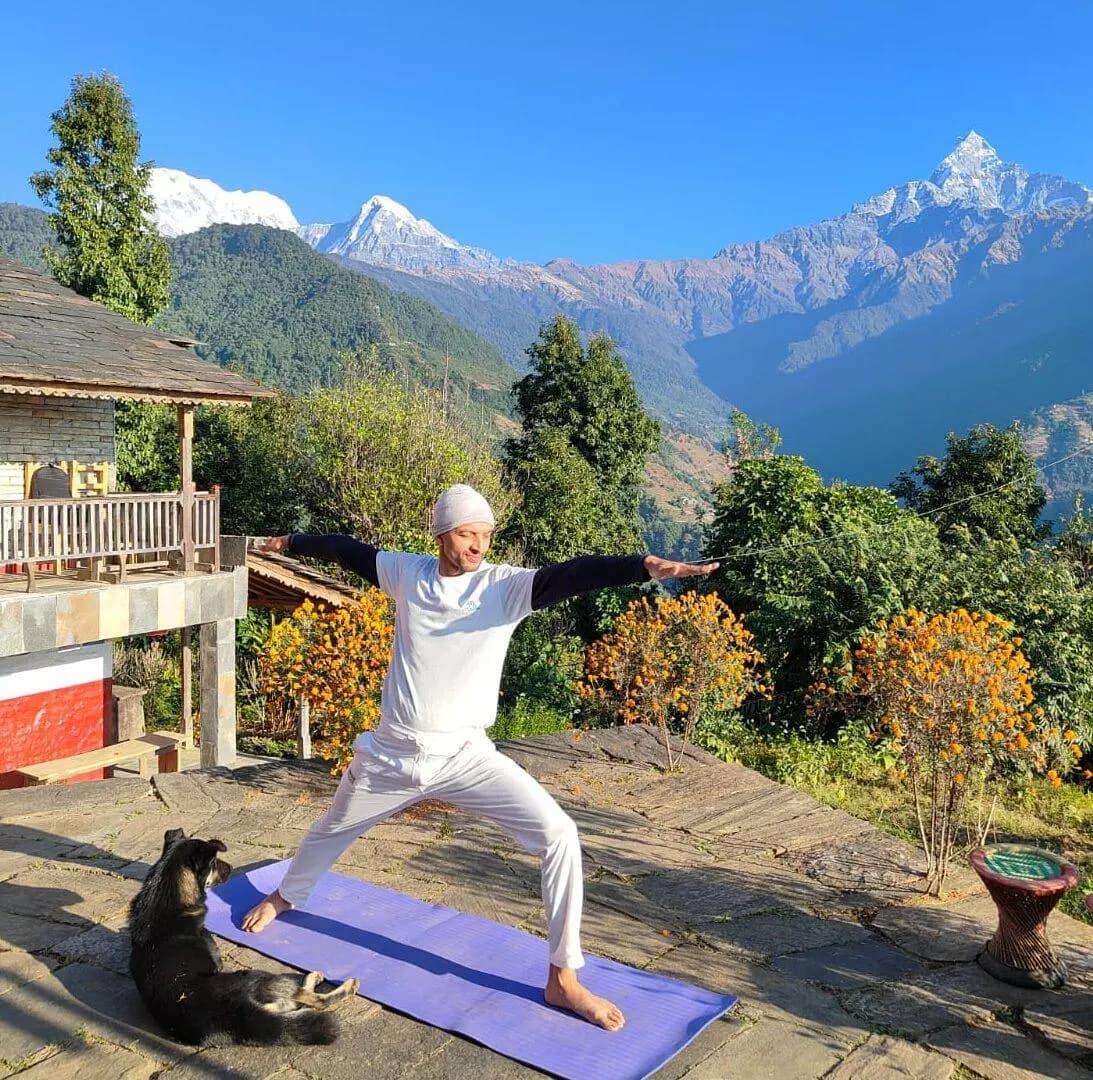
Written by
Swami AnandaSwami Ananda is the founder of Yoga in Pokhara, with over 10 years of teaching experience. Trained at ashrams in the Himalayas, he brings authentic yoga traditions to Pokhara, Nepal.
Experience Traditional Yoga from the Himalayan Tradition
Come discover what yoga really is. Traditional practice with authentic instruction in the heart of the Himalayas.