
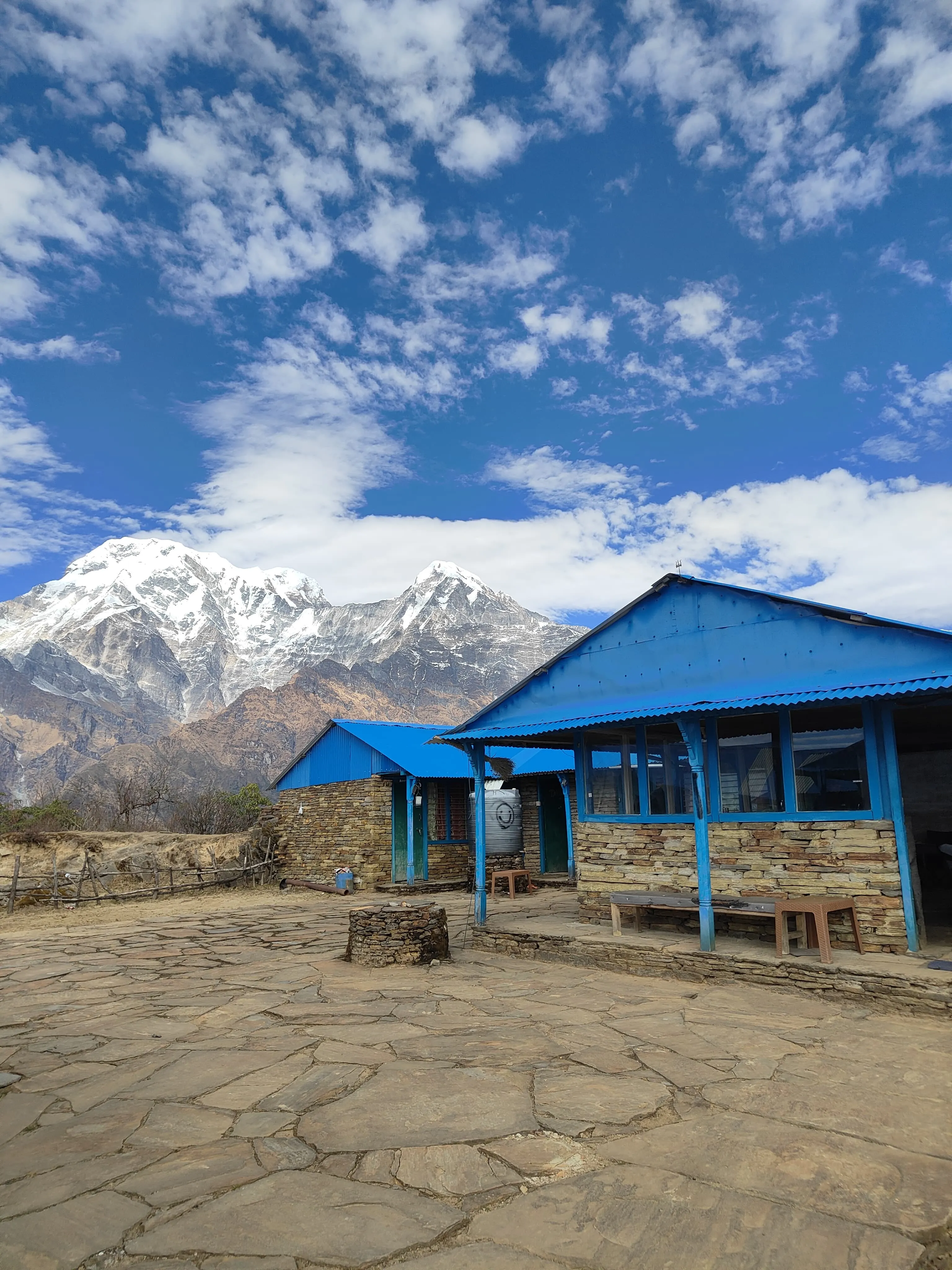
Himalayan Yoga at the Foot of Annapurna
Yoga in the Himalayas
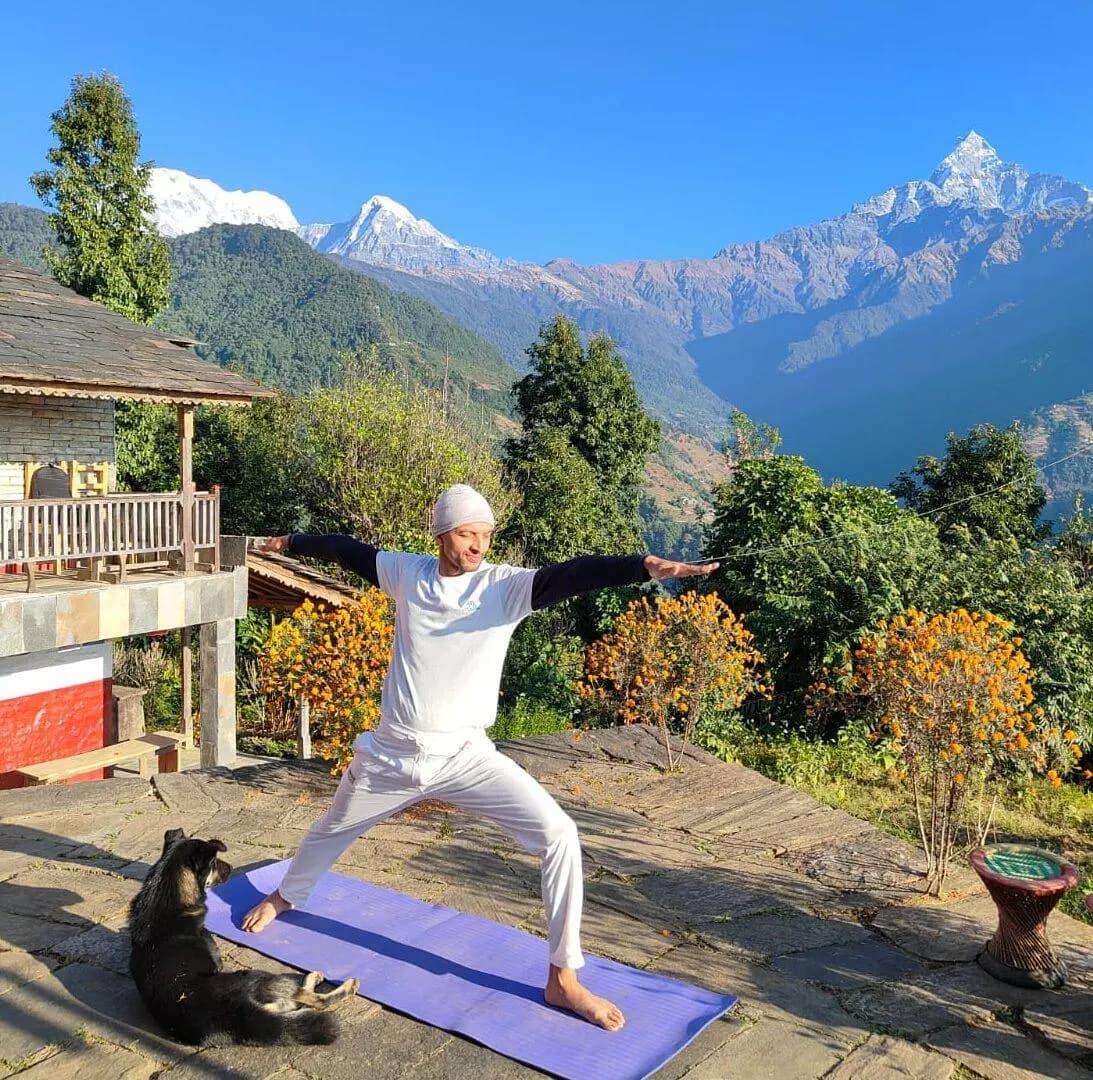
Practice yoga in the Himalayas without a single day of trekking. Annapurna South, Hiunchuli and Machhapuchhre stand in direct view of our practice space in Ghachowk, 30 minutes above Lakeside Pokhara.
What Yoga in the Himalayas Is Actually Like
Yoga in the Himalayas is not a marketing phrase - it is a specific set of conditions. Thin, clean air that makes pranayama rewarding instead of punishing. Silence broken only by wind and birds. And a horizon of 6,000-metre-plus peaks that stays in your field of vision from the first sun salutation to the last breath of shavasana. For thousands of years yogis have climbed into these mountains for exactly that. Ancient texts call the Himalayas the "abode of snow" where gods reside and where the boundary between physical and spiritual worlds dissolves.
Practitioners who practice yoga in the Himalayas today report experiences that echo those teachings: deeper meditation, more profound stillness, a sense of connection to something vast. Whether you attribute this to sacred energy, clean mountain air, natural beauty, or psychological effect doesn't matter - the transformation is real and accessible to anyone who comes to practice.
You do not have to trek to get it. Of the three places you can realistically practice Himalayan yoga, Tibet is politically restricted and India's Himalayan hill stations are harder to reach, which leaves Nepal as the most accessible option. From our base for yoga in Pokhara in Ghachowk village, Annapurna South (7,219m), Hiunchuli (6,441m) and Machhapuchhre (6,993m) stand in direct view of the practice space - no trekking permit, no altitude, no walk in.
Why Practicing Yoga in the Himalayas Is Different
Sacred Mountain Energy
The Himalayas are considered sacred in Hindu, Buddhist, and yogic traditions. Ancient texts describe mountains as places where the veil between physical and spiritual realms thins. Practitioners report deeper meditation and heightened awareness when practicing in view of these peaks.
Pristine Mountain Air
Himalayan air is naturally pure, low in pollutants, and rich in negative ions from flowing water and forest coverage. This makes pranayama (breathing practices) genuinely beneficial rather than counterproductive, as it can be in polluted urban environments.
Natural Stillness
Away from urban noise, the mountains offer profound silence broken only by wind, birds, and flowing water. This natural soundscape supports meditation without the mental effort required to block out traffic, construction, and human commotion.
Visual Magnificence
Practicing yoga with 8,000-meter peaks as your backdrop creates an immediate sense of perspective and humility. The mountains remind us of forces far greater than individual concerns, naturally cultivating the mental qualities yoga seeks to develop.
Sacred Peaks Visible from Pokhara
From our location in Ghachowk, these sacred mountains form your practice backdrop.
Machhapuchhre (Fishtail)
6,993mSacred to Lord Shiva and forbidden to climb. Its perfectly formed peak dominates the Pokhara skyline and is visible from yoga practice spaces in Ghachowk.
Annapurna I
8,091mNamed after the Hindu goddess of nourishment. First 8,000m peak ever climbed (1950). Represents abundance and sustenance in spiritual practice.
Dhaulagiri
8,167mThe "White Mountain" - seventh highest peak in the world. Visible from western Pokhara valley on clear days.
Manaslu
8,163mThe "Mountain of the Spirit" - eighth highest peak. Sacred to both Hindu and Buddhist traditions.
The Himalayan Yogic Tradition
The Himalayas are not just a beautiful location for yoga - they are where yoga evolved. Ancient rishis (sages) developed practices in mountain caves, refined by the unique conditions: thin air demanding controlled breathing, cold temperatures requiring internal heat generation (tapas), isolation enabling deep meditation.
Many yoga lineages trace directly to Himalayan masters: the Nath tradition from Gorakhnath, Kriya Yoga preserved in Himalayan monasteries, the tradition of Swami Sivananda from Rishikesh (at the Himalayan foothills). These teachings were refined over centuries in mountain environments.
"When I sit for meditation and open my eyes to Machhapuchhre, something shifts. The mountain has been here for millions of years. My problems seem smaller. My practice seems more meaningful. This is why yogis came to the Himalayas."
- Long-term yoga practitioner, Pokhara
Four Ways to Practice Yoga in the Himalayas
Daily Practice in Pokhara
The most accessible option. Practice at a yoga center with mountain views, no trekking required. Morning sessions often have clearest views.
- Direct Annapurna range views
- Comfortable accommodation
- Suitable for all fitness levels
Mountain Retreat
Immersive multi-day experience. Stay in mountain setting, daily practice, deeper connection with landscape. Various duration options.
- Full immersion experience
- Disconnection from daily life
- Weekend to week-long options
Yoga Trek Combination
Nepal's unique offering: combine Himalayan trekking with yoga practice. Morning yoga, daytime hiking, evening meditation in mountain lodges.
- Adventure + spirituality
- Deep mountain immersion
- Requires moderate fitness
Teacher Training
4 weeks of intensive study in Himalayan environment. Transform your practice and gain certification to teach others in this sacred landscape.
- Complete transformation
- Yoga Alliance certification
- India-trained instructors
Questions About Yoga in the Himalayas
Written by
Swami AnandaSwami Ananda is the founder of Yoga in Pokhara, with over 10 years of teaching experience. Trained at ashrams in the Himalayas, he brings authentic yoga traditions to Pokhara, Nepal.
Practice Yoga in the Himalayas
Join us in Ghachowk, where the Annapurna range is the backdrop to every session. From residential retreats to 200-hour teacher training, this is Himalayan yoga you can reach in 30 minutes from Lakeside Pokhara.