
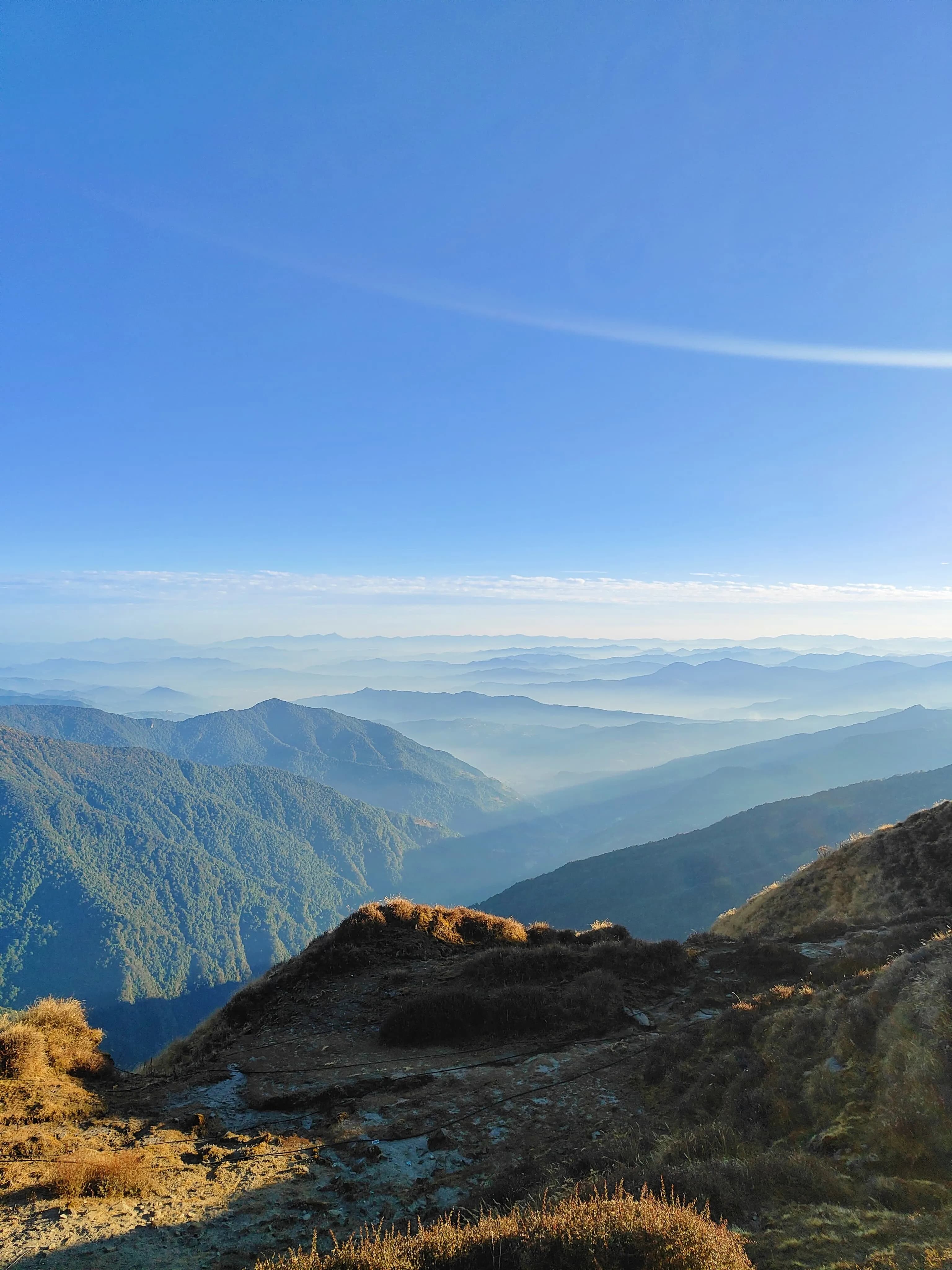
Practice with the Himalayas
Mountain Views from Ghachowk
Our Ghachowk yoga center offers unobstructed views of the Annapurna range. The presence of sacred peaks transforms every practice session.
Why Mountains Matter for Yoga
The Himalayas have drawn spiritual seekers for millennia. This isn't just aesthetics - the presence of mountains creates an energy that affects practice. Ancient yogis understood this intuitively; modern practitioners confirm it through experience. When you practice yoga facing sacred peaks, something shifts.
Our Ghachowk location was chosen specifically for its mountain views. Unlike studios in central Pokhara or Lakeside, nothing blocks the view. The Annapurna range rises directly ahead, present during every practice session.
This is why we chose Pokhara over other Nepali locations, and why we chose Ghachowk within Pokhara. The mountain view isn't a bonus - it's central to what we offer.
The View from Our Practice Space
These are the peaks you'll practice with. Not distant specks - immediate presence.
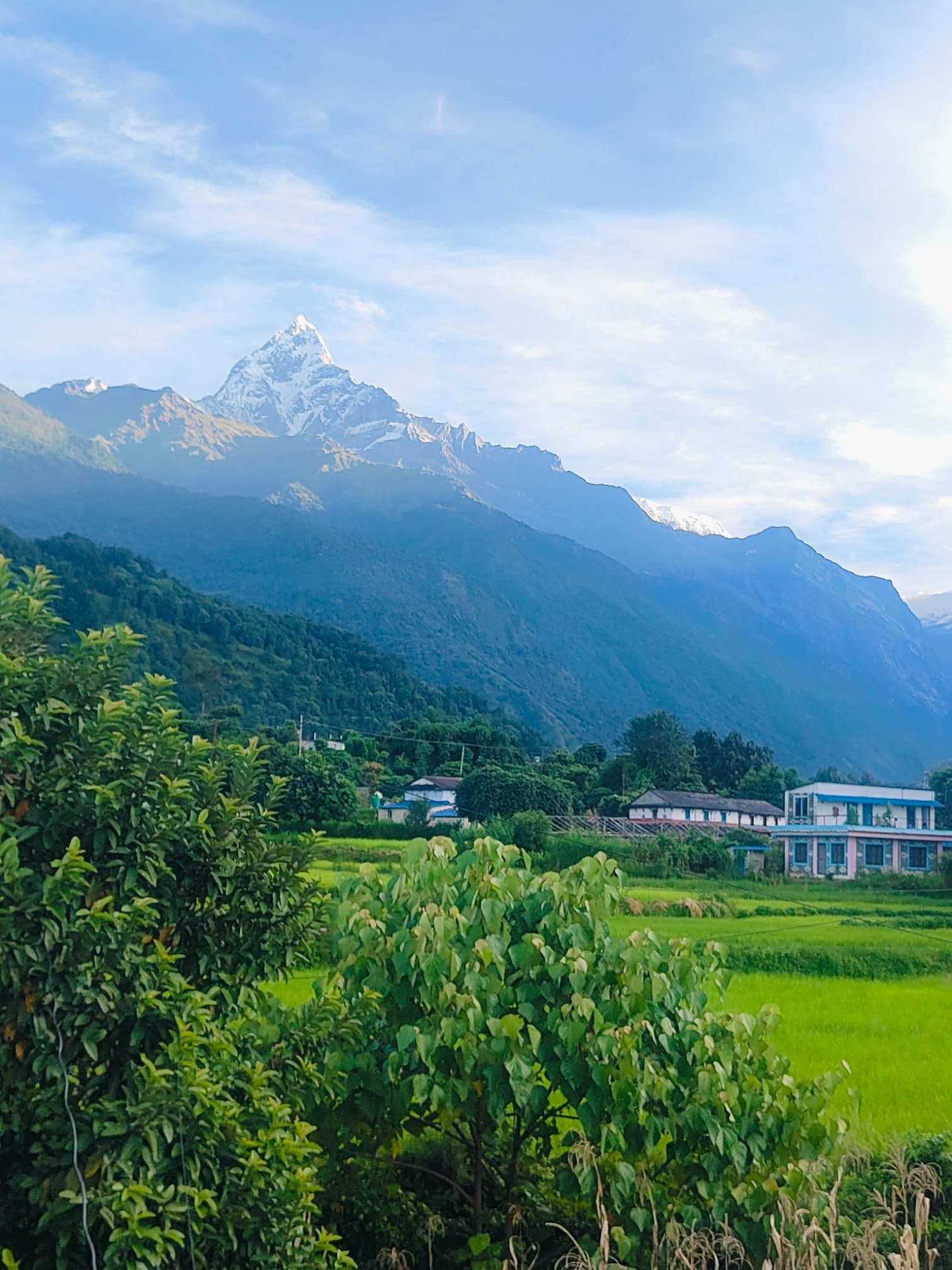
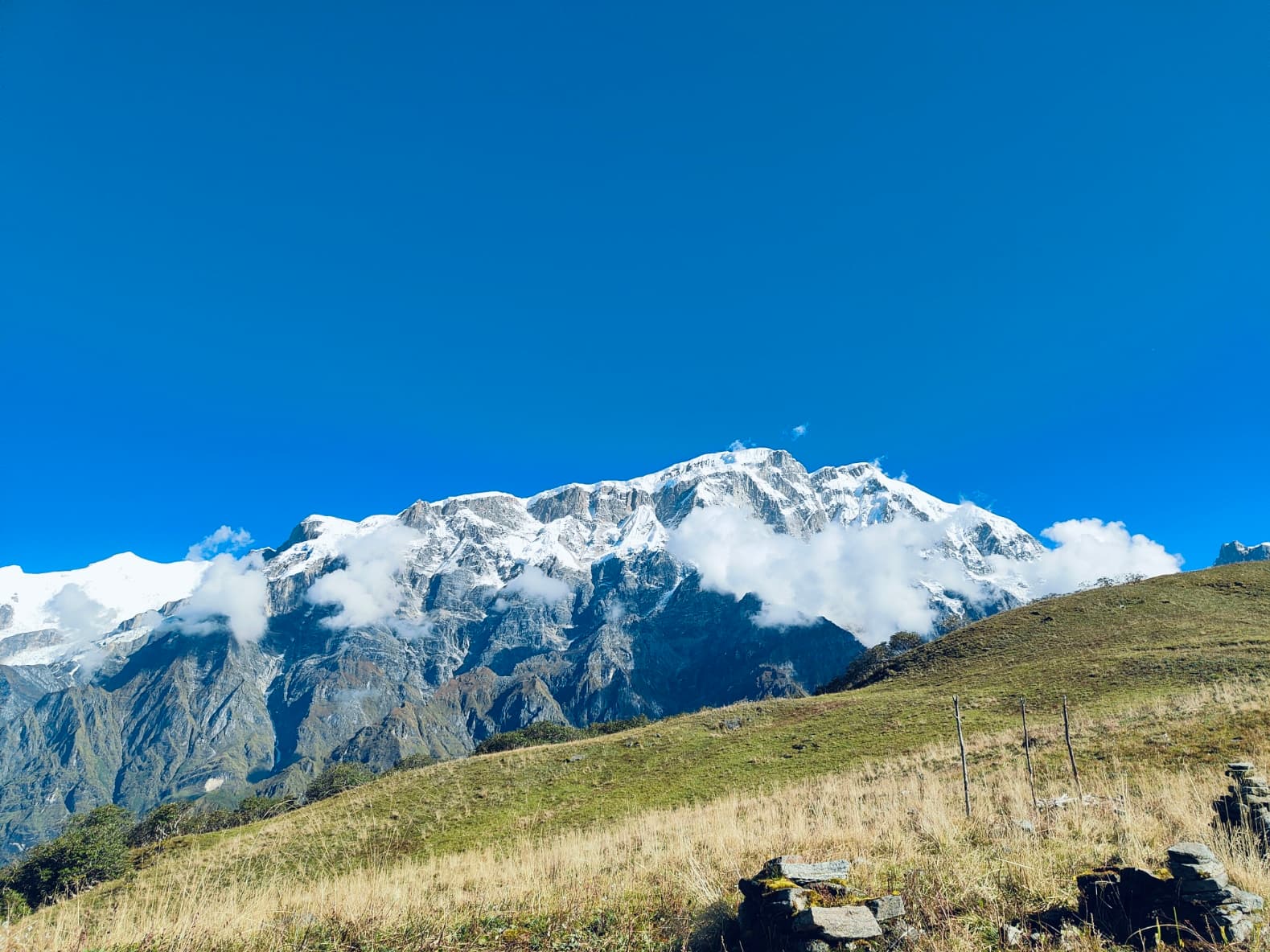
Peaks You'll See
On clear days, especially October-November (post-monsoon) and March-May (spring), these giants of the Himalayas are visible from our practice space.
Machhapuchhre (Fishtail)
6,993m
The sacred fish-tail peak, never climbed. Dominates the skyline with its distinctive twin summits. Catches morning light spectacularly.
Annapurna South
7,219m
Massive presence to the west of Fishtail. Often the first peak to catch sunrise alpenglow. Part of the great Annapurna massif.
Hiunchuli
6,441m
Stands prominently between Annapurna South and Machhapuchhre. Distinctive pyramid shape makes it easily identifiable.
Annapurna III
7,555m
Visible on clear days further to the west. Part of the extended Annapurna range that creates the panoramic backdrop.
Annapurna IV
7,525m
Another giant of the Annapurna massif, visible on exceptionally clear days, particularly in October-November.
Mountains Throughout the Day
Sunrise (5:30-6:30)
First light catches the peaks. Alpenglow turns snow gold, then pink, then brilliant white. Our sunrise sessions capture this magic.
Morning (7:00-10:00)
Clearest views often occur in morning before clouds build. Peaks sharp against deep blue sky. Perfect for photography and practice.
Midday (11:00-3:00)
Clouds often gather around peaks. Mountains play hide and seek. Rest period in our schedule - good time for journaling or napping.
Evening (4:00-6:00)
Clouds often clear for sunset. Golden light paints the peaks. Evening practice with this backdrop is deeply meditative.
Best Seasons for Mountain Views
October - November
Post-monsoon season. The air has been washed clean by months of rain. Crystal clear skies, minimal haze, maximum visibility. This is peak trekking season for good reason - the views are extraordinary.
Expect clear views nearly every day. Morning visibility is exceptional. Best time for photography and visual impact.
March - May
Spring season. Warming weather, rhododendron blooms in the hills. Views are generally good though slightly hazier than autumn. Very pleasant temperatures for practice.
Clear mornings common. May can have pre-monsoon heat haze. Bonus: stunning flowers in surrounding hills.
December - February
Winter season. Cold mornings but often very clear. Snow line drops lower on peaks. Quiet season with fewer tourists. Layer up for early practice.
Some of the clearest views of the year. Cold but manageable with proper clothing. We have blankets and hot tea.
June - September
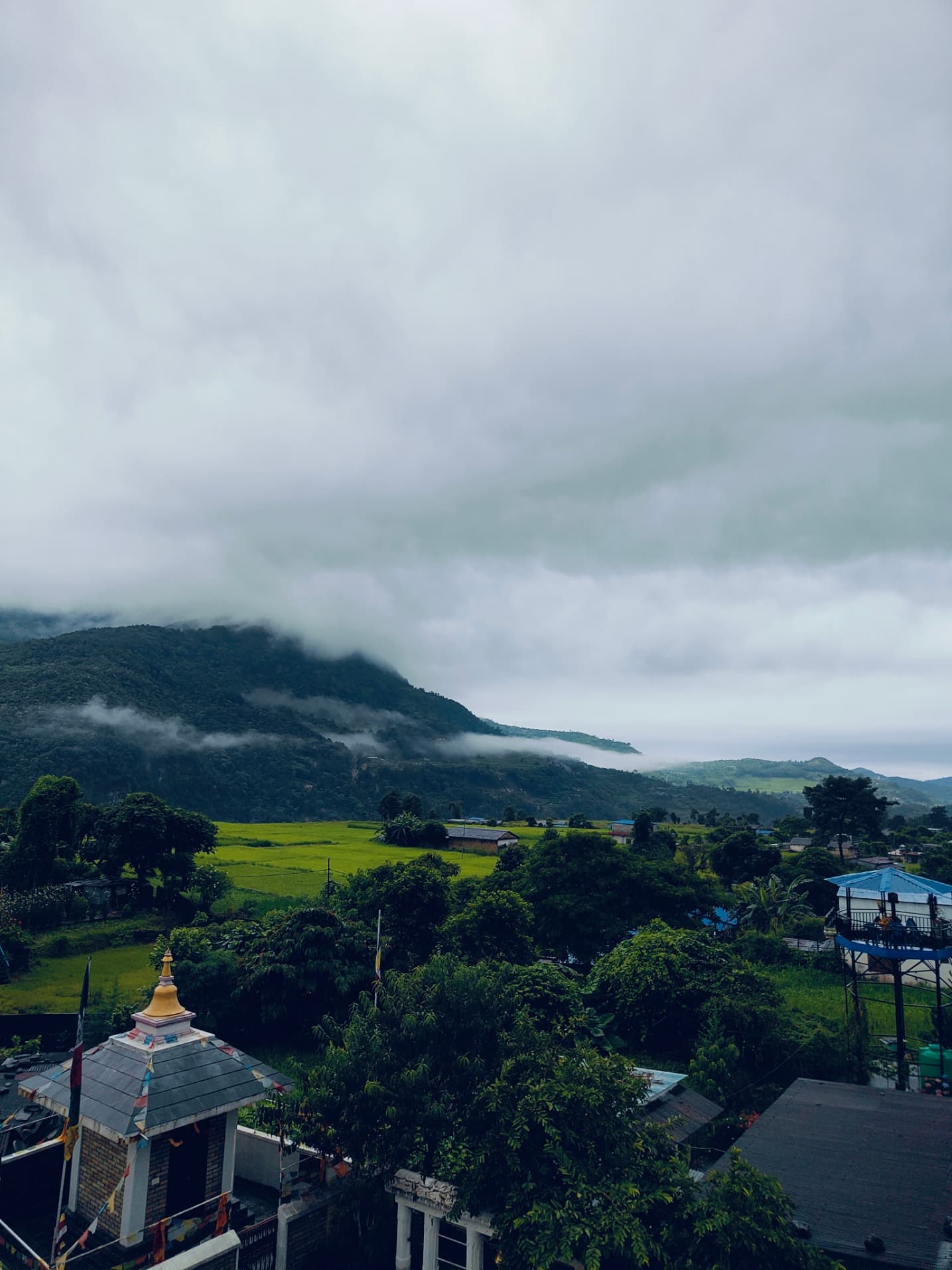
Monsoon season. Mountains often hidden by clouds and rain. But dramatic moments when clouds part. Lush green landscape. Fewer tourists, lower prices.
Don't come primarily for views. But excellent for practice with rain sounds, and occasional dramatic mountain reveals are magical.
Practice with the Himalayas
Come experience yoga with the Annapurna range as your backdrop. One sunrise practice will show you why mountains matter.