
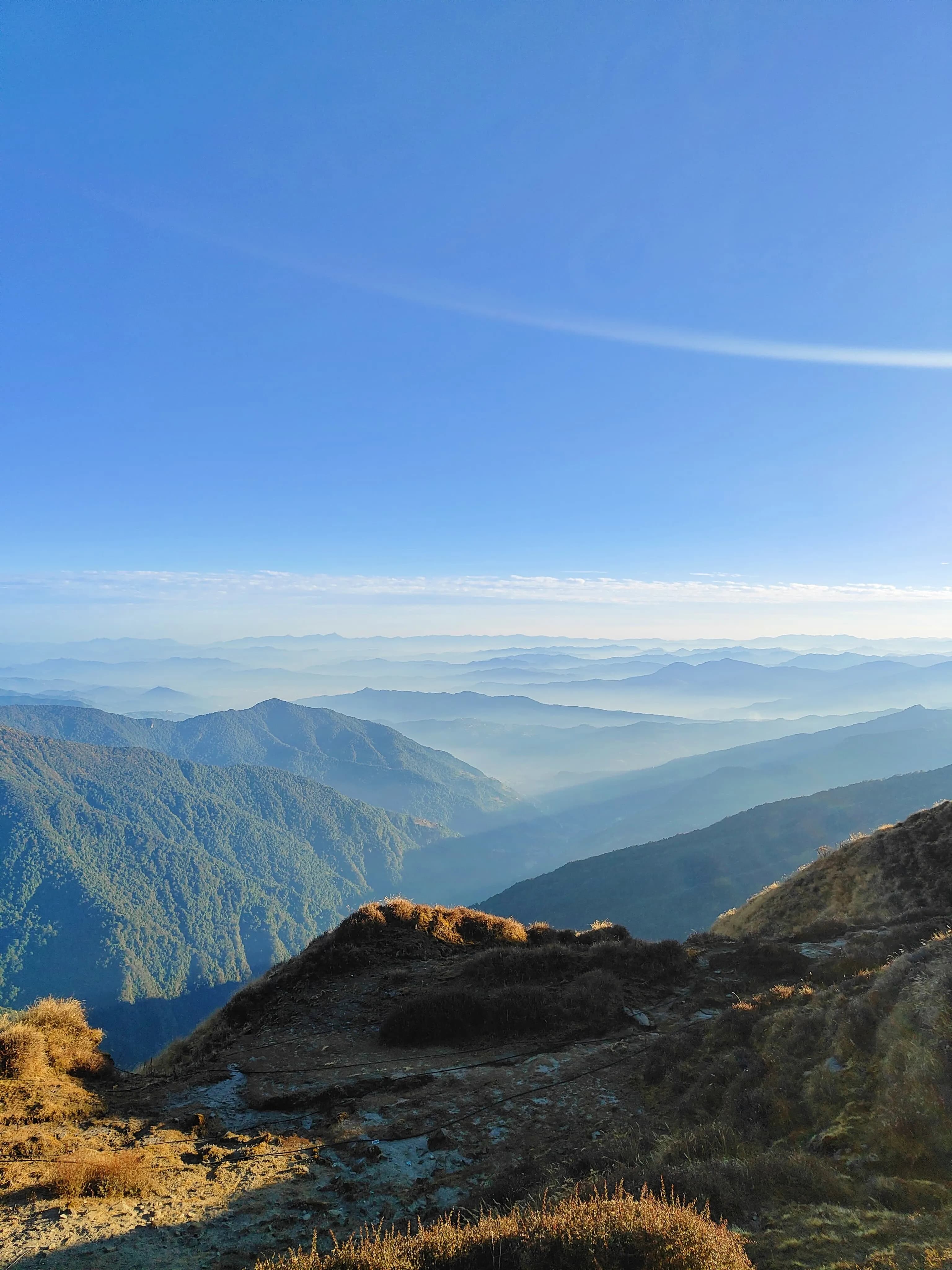
Why Location Transforms Practice
Peaceful Yoga Environment
Authentic yoga requires more than a mat and an instructor. Discover why our mountain setting in peaceful Ghachowk creates conditions that urban studios cannot replicate.
Environment Is Not Incidental
Classical yoga texts don't just describe techniques - they describe where to practice. The Hatha Yoga Pradipika specifies: "The yogin should practice in a small room, situated in a solitary place, being four cubits square, and free from stones, fire, water, disturbances of all kinds..." The sages knew that environment affects practice.
Modern yoga often ignores this. Classes happen in strip mall studios next to traffic, in gyms between cardio machines, in basements with no natural light. The poses are taught, but the conditions for deep practice are absent. Students struggle with concentration they might easily achieve in supportive surroundings.
Our Ghachowk location isn't accidental. We chose this village specifically because it offers what yoga requires: quiet, clean air, natural beauty, and separation from the chaos of tourist areas. The environment does half the work - your nervous system calms, your breath deepens, and focus comes more easily.
What Our Environment Offers
Each element of our Ghachowk setting serves your practice in specific ways.
Mountain Presence
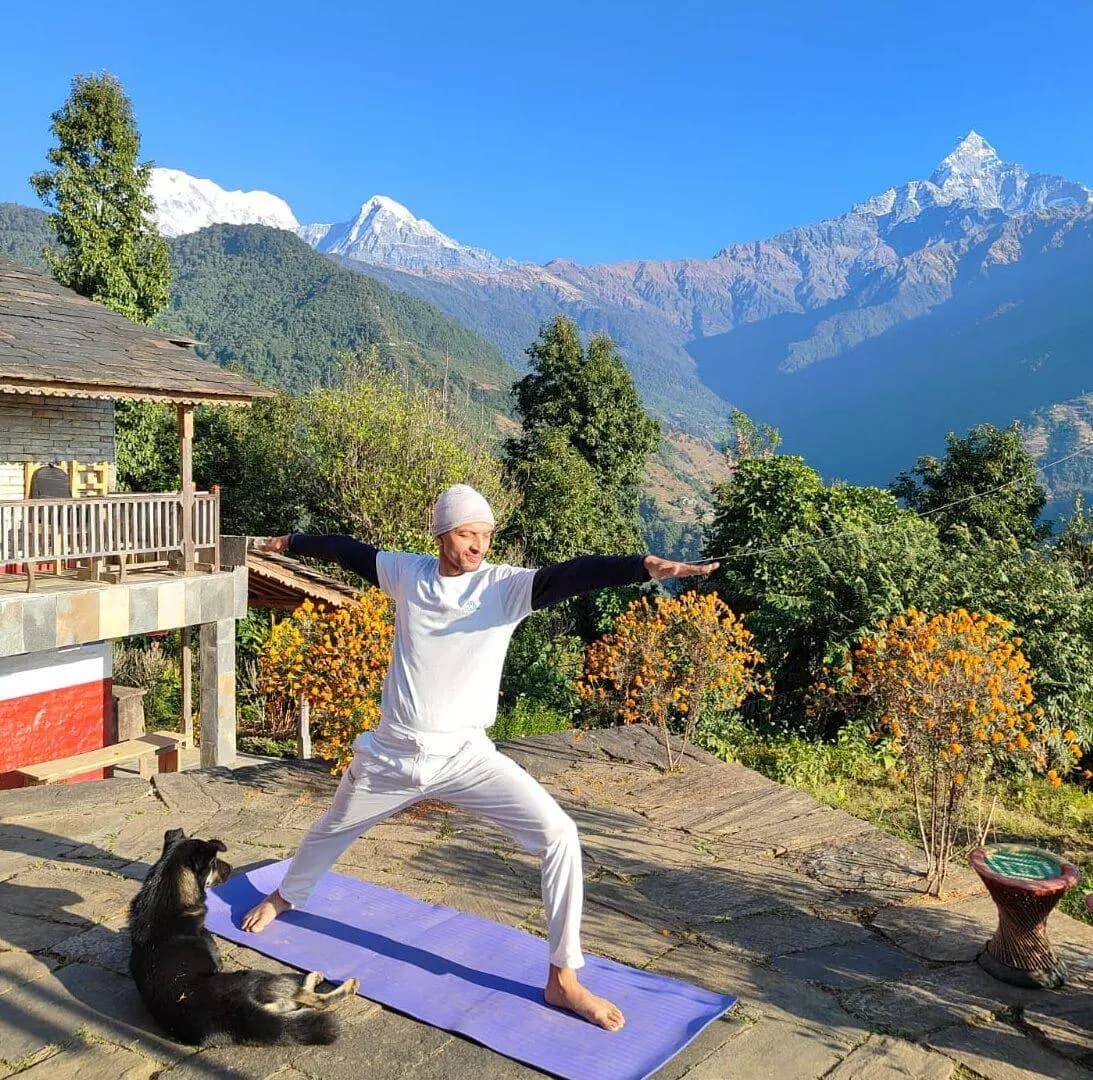
Direct views of Annapurna and Machapuchare from our practice spaces. The presence of sacred peaks naturally draws awareness inward and elevates practice.
Village Quiet
Ghachowk is a working village, not a tourist zone. No bar noise, no restaurant music, no hawkers. Just birds, wind through trees, and occasional village sounds.
Clean Mountain Air
At 1,100m elevation, above Pokhara's dust and pollution. Essential for pranayama practice - you can actually breathe fully and deeply.
Natural Rhythms
Life here follows natural cycles. Early to bed, early to rise. No artificial lighting competing with sunset. Your circadian rhythms reset naturally.
Space to Decompress
After arriving, most guests need a day to shed the mental noise of travel and daily life. Our peaceful setting accelerates this decompression.
Undisturbed Practice
Our practice hall faces the mountains with no visual distractions. During meditation, the silence supports rather than challenges your focus.
Urban Studios vs. Our Mountain Setting
Why This Works: The Science
Nervous System Response
Natural environments activate the parasympathetic nervous system (rest and digest). Urban environments trigger sympathetic activation (fight or flight). Beginning practice in parasympathetic state makes relaxation, meditation, and pranayama more accessible.
Attention Restoration
Research shows natural settings restore directed attention capacity. After time in nature, focus improves. Our mountain environment provides continuous "soft fascination" that rests the cognitive systems urban life exhausts.
Air Quality & Breath
Pranayama requires clean air. Breathing deeply in polluted urban air is counterproductive. At 1,100m with no industry or traffic, our air quality allows full pranayama practice with actual benefit.
Circadian Alignment
Natural light exposure, darkness at night, and freedom from screens resets circadian rhythms. Better sleep quality improves all aspects of practice and learning during yoga programs.
What Guests Experience
"I've practiced yoga for years in city studios. The first morning here, I sat for meditation and... just sat. No struggle. The quiet did the work."
- YTT Graduate, 2024
"By day three, I realized how much mental noise I normally carry. Here it just... dissolved. The mountains, the quiet - it changes something fundamental."
- Retreat Participant
"I thought environment didn't matter - I'm disciplined enough to practice anywhere. But the depth I reached here, I've never touched before."
- Advanced Practitioner
"The pranayama practice here was transformative. Clean mountain air, silence for concentration - I finally understood what breath work can be."
- Teacher Training Student
Environment Questions
Written by
Swami AnandaSwami Ananda is the founder of Yoga in Pokhara, with over 10 years of teaching experience. Trained at ashrams in the Himalayas, he brings authentic yoga traditions to Pokhara, Nepal.
Experience the Difference
Words can only suggest what peaceful practice feels like. Come experience it directly - in the mountains, in the quiet, in the presence of the Himalayas.