
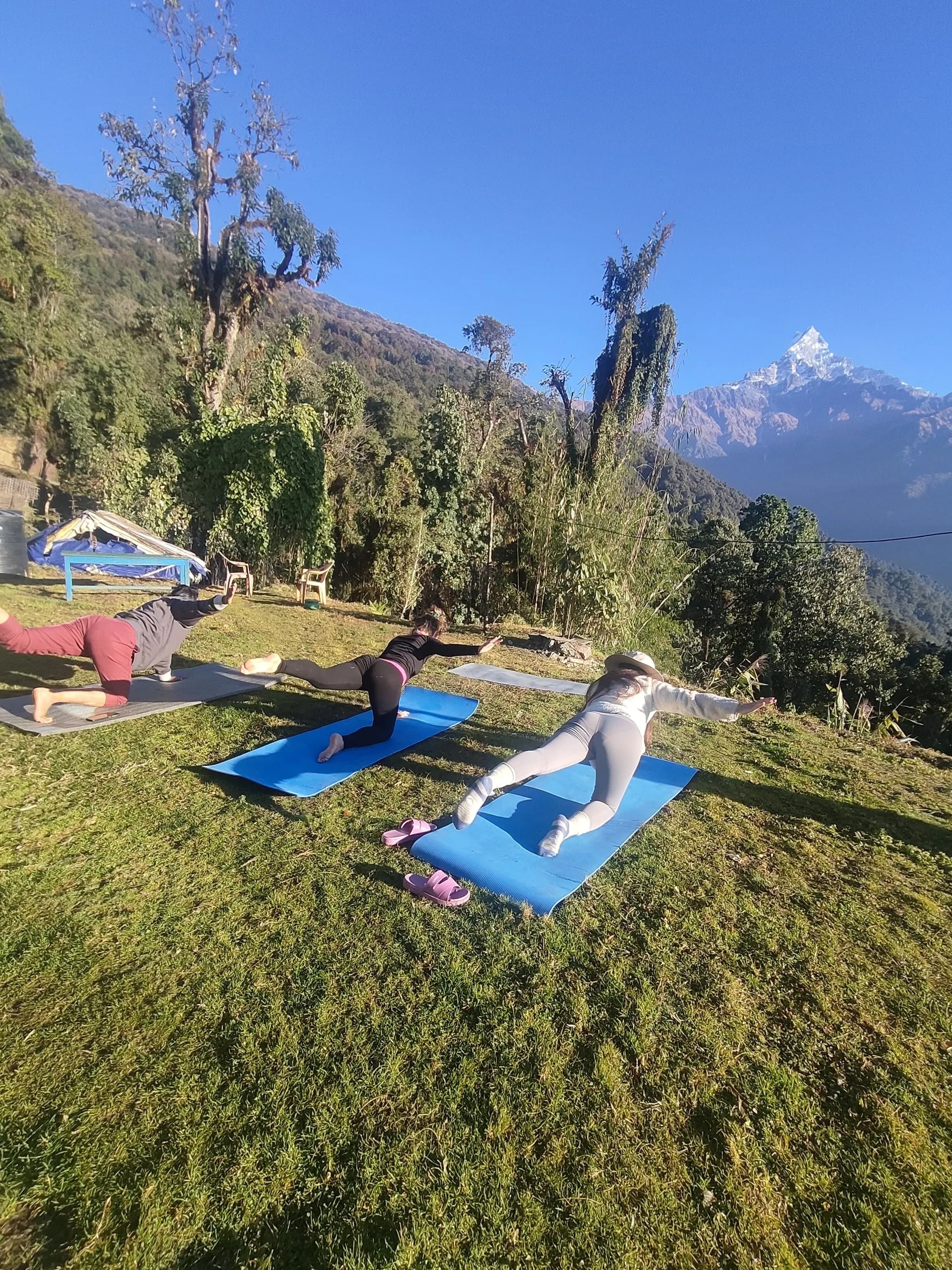
Deep Stillness, Profound Release
Yin Yoga Classes
Slow down completely. Yin yoga holds poses for minutes, not seconds - releasing deep connective tissue and cultivating meditative awareness.
What Is Yin Yoga?
Yin yoga is the opposite of dynamic practice. Where Vinyasa flows, Yin stays. Where Ashtanga builds heat, Yin cools. Poses are held for 3-5 minutes, allowing connective tissue - ligaments, fascia, joints - to gently release in ways that brief holds never achieve.
This isn't passive or easy. Staying still with sensation is its own challenge. The mind wants to escape, to plan, to distract. Yin teaches you to stay present with whatever arises - physical sensation, emotional response, mental chatter - without reacting.
Yin perfectly complements active practice. Yogis doing daily Vinyasa or Ashtanga often develop tight fascia despite flexible muscles. Yin releases what active practice cannot. It's also ideal recovery after trekking, restoring mobility to stressed joints and tissues.
For a complete immersion in meditative practices, join our yoga meditation retreat. If you want a more dynamic practice to balance with Yin, explore our Vinyasa Flow classes.
Benefits of Practice
Physical Benefits
- Releases fascia and deep connective tissue
- Increases joint mobility and range of motion
- Improves flexibility in hips, spine, and shoulders
- Stimulates meridian lines (Traditional Chinese Medicine)
- Aids recovery from active exercise and trekking
- Supports healthy joint function as we age
Mental & Emotional Benefits
- Cultivates patience and stillness
- Activates parasympathetic nervous system
- Reduces stress and anxiety
- Develops equanimity with discomfort
- Prepares body-mind for meditation
- Processes stored emotional tension
Preparing for Yin Yoga
Warm Layers
Yin generates little heat. Body temperature drops during long holds. Wear layers, socks, and even a light jacket to stay comfortable. Warm muscles release more easily.
Patience with Timing
Yin cannot be rushed. The clock is part of the practice. If you're used to Yang yoga's pace, Yin will feel very slow initially. Give yourself time to adjust.
Honesty About Sensation
Yin requires honest self-assessment. Sharp pain means back off. Dull ache or sensation is okay. Learn to distinguish the body's signals and respect them.
Mental Preparation
Yin can trigger restlessness or strong emotions. This is normal and part of the practice. Come willing to be with whatever arises without needing to fix or change it.
No Big Meals
Practice on mostly empty stomach for comfort in forward folds and twists. Light snacks are fine. Avoid heavy meals 2-3 hours before class.
Yin Yoga Class Structure
75 Minutes of Deep Release
Arrival & Settling (5 minutes)
Gather props, find comfortable spot, begin the transition from doing to being. Brief introduction to the theme or focus of today's practice.
Grounding Sequence (15 minutes)
Beginning poses to settle nervous system and establish the Yin quality. Longer holds starting gently - dragon pose, butterfly, sphinx variations.
Deep Hip Opening (20 minutes)
Primary poses targeting hip flexors, external rotators, and deep hip muscles. Swan, sleeping pigeon, dragon, lizard. Each held 3-5 minutes with support.
Spine & Side Body (15 minutes)
poses for spinal health and side body opening. Caterpillar, banana, saddle, twist variations. Releasing the back body and opening the front.
Integration & Rest (20 minutes)
Final restful poses and extended shavasana. Allowing the practice to integrate. Often closes with brief meditation or pranayama.
The Yin Philosophy
Taoist Principles of Stillness
Yin and Yang Balance
Yin and Yang are complementary forces. Yang is active, changing, hot. Yin is passive, still, cool. Modern life is overwhelmingly Yang. Yin practice restores essential balance.
Fascia Not Muscle
Yang yoga targets muscles. Yin targets fascia - the connective tissue network that wraps everything. Fascia responds differently: slow, steady, long-hold stress creates positive adaptation.
The Edge Not Limit
In Yin, we work at our edge - where sensation is moderate and sustainable, not intense or painful. We find the place where we can stay present rather than needing to escape.
Stillness as Practice
The challenge is not the pose - it's staying still. Boredom, restlessness, discomfort - these are the practice. Yin develops the capacity to be with whatever arises.
Our Yin Approach from Taoist & Himalayan Traditions
True Yin Timing
Poses held 3-5 minutes as the practice requires. No shortened versions - proper time is essential for fascial release. Traditional timing respects tissue physiology.
Supportive Props
Blankets, bolsters, blocks, and straps allow you to settle into poses without muscular effort. Support enables deeper release by relaxing the muscles that would otherwise protect the tissues.
Evening Sessions
Yin classes offered in evening when the body is warm from daily activity and the mind is ready to settle. Perfect preparation for restful sleep.
Meditative Atmosphere
Quiet environment, minimal guidance, maximum space for internal work. Yin is stillness meditation - the practice happens in silence.
Himalayan Setting
The natural quiet of Ghachowk village supports Yin perfectly. No traffic noise, no distractions - just birds, wind, and your internal experience.
What Our Students Say
Verified reviews from real students
121 reviews

19 reviews
Marcel Noack
Germany
Just pay a visit and you will understand why this place is special. Authentic yoga teachings, peaceful environment, and wonderful hosts. A hidden gem in Pokhara.
Yoga RetreatLee Seung-hun
South Korea
The best yoga class in this city. With teachers who has warm heart.
Drop-in ClassesTove Eklund
Sweden
Such a wonderful and empowering experience. Dedicated, hospitable and knowledgeable leaders. Clean and cozy facilities. Tasty and healthy food.
Yoga RetreatLise Crauwels
Belgium
Really nice spot to stay some days in Pokhara in between trekkings. Lovely yoga classes from Deepika 2 times a day. Oasis of peace with little garden in the center of Pokhara near the lakeside.
Drop-in ClassesJoin hundreds of satisfied students
Get in TouchExplore More Yoga Styles
Discover more options within our yoga classes collection
Beginner Classes
Start your yoga journey with beginner-friendly classes in Pokhara. No experience needed.
Nepal Beginners
Complete beginner yoga guide for Nepal. Learn fundamentals, what to expect, and how to start.
Evening Yoga
Unwind with relaxing evening yoga classes in Pokhara as the sun sets over the Himalayas.
Hatha Yoga
Traditional Hatha yoga classes in Pokhara focusing on postures, breathing, and alignment.
Vinyasa Yoga
Dynamic Vinyasa flow yoga classes in Pokhara linking breath with movement.
Ashtanga Yoga
Structured Ashtanga yoga practice in Pokhara following the traditional series.
Class FAQs
Written by
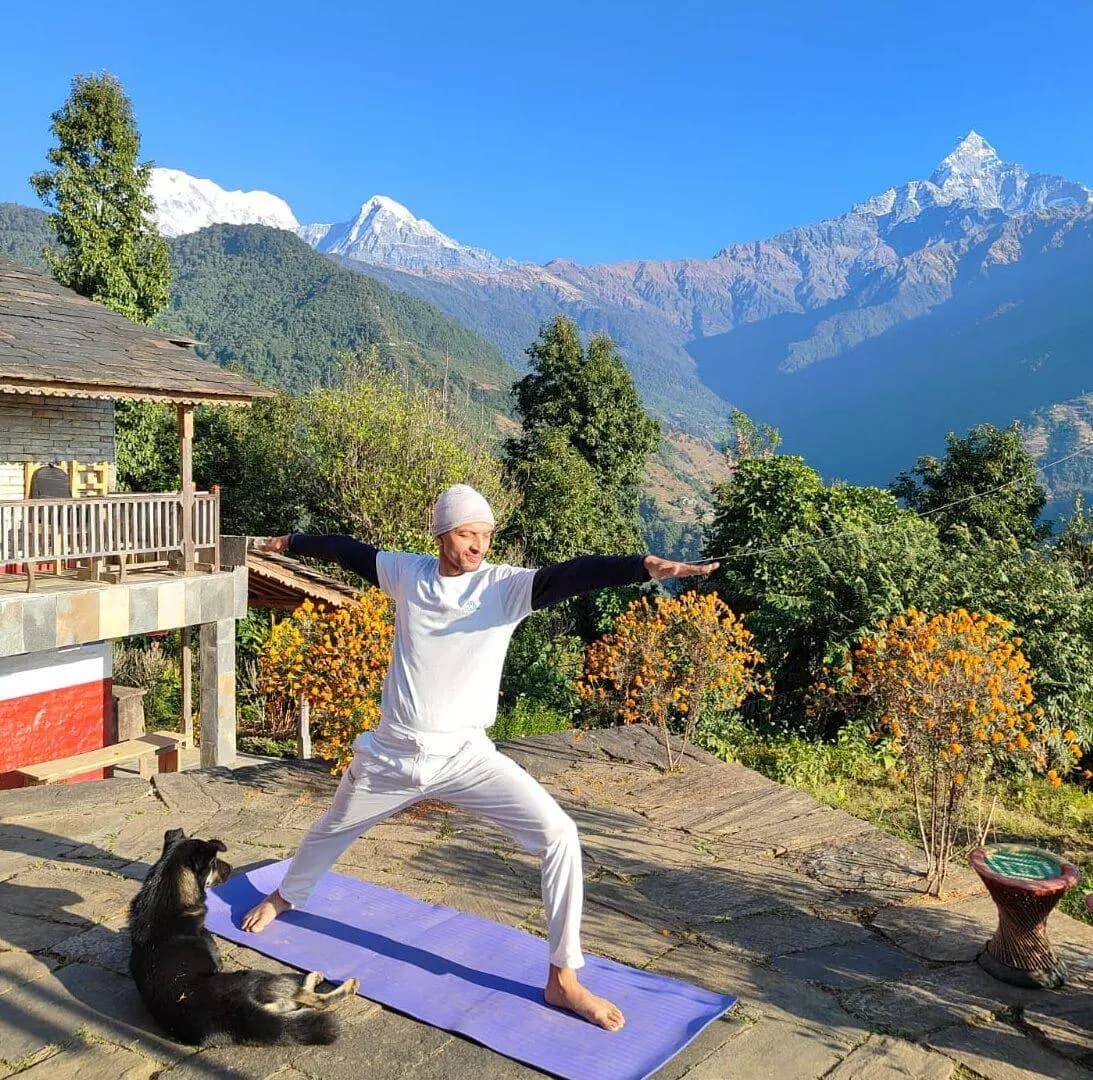
Swami AnandaSwami Ananda is the founder of Yoga in Pokhara, with over 10 years of teaching experience. Trained at ashrams in the Himalayas, he brings authentic yoga traditions to Pokhara, Nepal.
Slow Down Completely
In a world of constant motion, Yin yoga offers deep stillness. Join us for practice that transforms through staying rather than doing.