
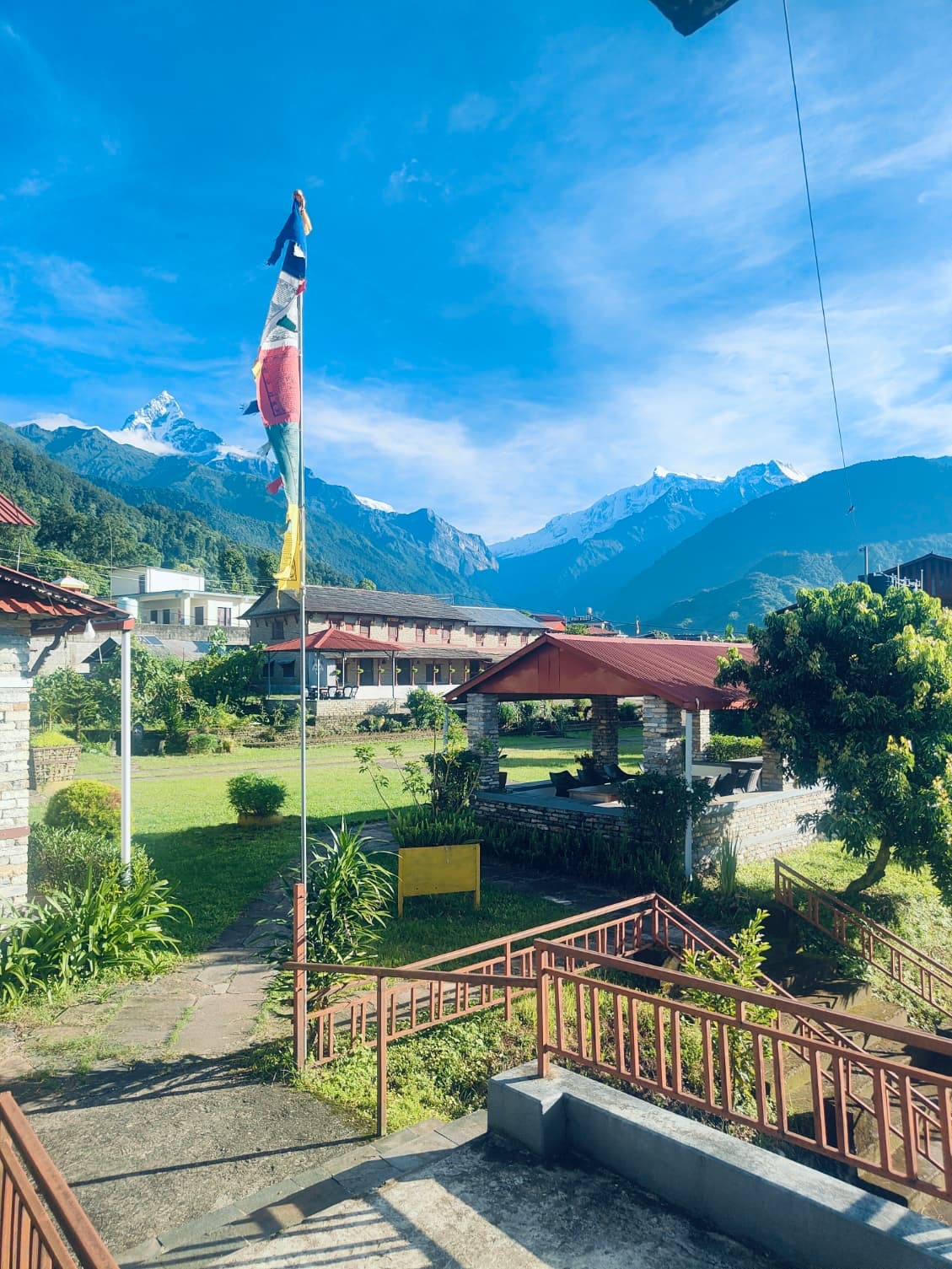
The Ideal Location for Teacher Training
Why Choose YTT in Pokhara?
Discover why serious practitioners choose Pokhara over India and Bali for yoga teacher training. Mountain views, clean air, authentic lineage, and exceptional value.
Why Location Matters for Yoga Teacher Training
Yoga teacher training (YTT) is an intensive, transformative experience. The location where you choose to complete your 200-hour certification significantly impacts your learning, practice, and overall experience.
Many people assume they should do YTT in India (the birthplace of yoga) or in tourist-friendly destinations like Bali. But increasingly, serious practitioners are choosing Pokhara, Nepal - and for very good reasons.
Pokhara vs India for YTT
India is the birthplace of yoga, but for many international students, Pokhara offers significant advantages.
Himalayan Mountains
India's major yoga centers (Rishikesh, Mysore, Goa) are in plains or coastal areas. Pokhara offers direct views of the Annapurna range from your practice space.
Clean Mountain Air
Indian cities often have serious pollution (AQI 100-200+). Pokhara's air is pristine (AQI typically under 50) - essential for intensive pranayama practice.
Less Overwhelming
India can be intense culture shock. Nepal offers the same traditional yoga knowledge but in a more manageable, peaceful environment.
Easier Navigation
English widely spoken, simpler visa process, less chaotic infrastructure.
Better Infrastructure
Reliable internet, comfortable accommodation, good food safety while still feeling authentic.
Similar Authenticity
Many Nepali instructors trained extensively in Indian Himalayas Ashrams and bring the same traditional knowledge.
More Affordable
Generally better value than the increasingly expensive Indian yoga hubs.
When India Might Be Better:
- You're seeking a specific guru or ashram that only exists in India
- You want intensive long-term study (months or years, not weeks)
- You're comfortable with intense cultural immersion
For most 200-hour YTT students, Pokhara offers the best combination of authenticity, environment, and accessibility.
Pokhara vs Kathmandu for YTT
Kathmandu has more yoga studios overall, but for intensive teacher training, Pokhara is clearly superior.
| Factor | Kathmandu | Pokhara |
|---|---|---|
| Mountain Views | Blocked by pollution/haze | Direct Annapurna views daily ✓ |
| Air Quality | Often polluted (AQI 100+) | Clean mountain air (AQI <50) ✓ |
| Noise & Chaos | Very high traffic, horns | Peaceful environment ✓ |
| Focus Environment | Many distractions | Meditation-friendly ✓ |
| Natural Setting | Urban, concrete | Nature immersion ✓ |
| Stress Level | High | Low ✓ |
| Trekking Access | Limited | Gateway to Annapurna ✓ |
For intensive study requiring focus, peace, and deep breathing practice - Pokhara wins decisively.
The Ghachowk Advantage
Lakeside Pokhara
- Convenient but noisy
- Crowded tourist area
- Bars and restaurants noise
- Not ideal for intensive study
Ghachowk (Our Location)
- Rural village peace
- Authentic Nepali setting
- Direct mountain views
- Silence and stillness
The 30-minute distance from Lakeside isn't an inconvenience - it's the point. This separation creates the quiet, focused space necessary for transformative training.
What Makes YTT in Pokhara Special
1. Himalayan Spiritual Energy
The presence of the Annapurna range isn't just scenic - it's energetically powerful:
- Visible sacred peaks - Machhapuchhre and Annapurna create natural focus points for meditation
- Mountain energy - Traditionally considered conducive to spiritual practice
- Thin veil - Mountain environments said to have thinner veil between material and spiritual
- Daily inspiration - Sunrise practice with Himalayan backdrop transforms your experience
2. Perfect Climate for Year-Round Training
Clearest mountain views, perfect temperatures
Spring warmth, comfortable for intensive practice
Unlike mountain villages, Pokhara is accessible 12 months
Many days allow outdoor asana, pranayama in nature
3. Indian Himalayas Ashram Lineage in Nepal
Our instructors trained extensively in Indian Himalayas Ashrams:
- Years of study - Not weekend certifications, but years of immersive training
- Guru-shishya parampara - Traditional teacher-student transmission
- Classical curriculum - Hatha, Ashtanga, pranayama, meditation, philosophy
- Living the practice - Our instructors don't just teach yoga, they embody it
Comprehensive Curriculum
Our 200-hour YTT covers everything you need to teach safely and authentically.
Asana & Alignment
- Proper alignment and sequencing
- Modifications for different bodies
- Hands-on adjustments
- Teaching methodology
Pranayama (Breathwork)
- Fundamental breathing techniques
- Cleansing breaths (kapalabhati, bhastrika)
- Balancing practices (nadi shodhana)
- Breath in asana and teaching
Meditation
- Multiple meditation techniques
- Guided vs self-directed
- Mantra, breath awareness, mindfulness
- Teaching meditation to others
Yoga Philosophy
- Yoga Sutras of Patanjali
- Eight limbs of yoga
- Yogic lifestyle and ethics
- History and lineage
Cost-Effective Quality Training
Compare 200-hour YTT pricing across popular destinations.
| Destination | Typical Cost |
|---|---|
| Rishikesh, India | $1,500-2,500 USD |
| Bali, Indonesia | $2,500-4,000 USD |
| Thailand | $2,000-3,000 USD |
| Western countries | $3,000-5,000+ USD |
| Pokhara, Nepal | $1,200-1,800 USD ✓ |
Pokhara offers the best value without compromising on quality or authenticity.
Small Group Sizes
Unlike large YTT programs with 30+ students, we limit our groups:
- Maximum 15 students per training
- Individual attention from lead instructors
- Personalized feedback on your teaching
- Community bonding without getting lost in crowd
Trekking + Yoga Combination
Only in Nepal (and specifically Pokhara) can you combine:
- 200-hour YTT in peaceful mountain setting
- Trekking in Annapurna region - Poon Hill, ABC
- Pre-trek preparation yoga
- Post-trek integration and recovery
This unique combination is impossible in India, Bali, or any other yoga destination.
Who is YTT in Pokhara For?
Perfect For:
- First-time yoga teachers wanting comprehensive training
- Experienced practitioners wanting to deepen knowledge
- Those wanting Himalayan mountain environment
- Students seeking Indian Himalayas Ashram Lineage
- People who prefer peace over party atmosphere
- Trekkers wanting yoga + trekking combination
May Not Be Ideal For:
- Those wanting nightlife and entertainment
- People seeking luxury resort experience
- Students wanting Western-style fitness yoga training
- Those uncomfortable with rural village setting
YTT Location FAQs
Written by
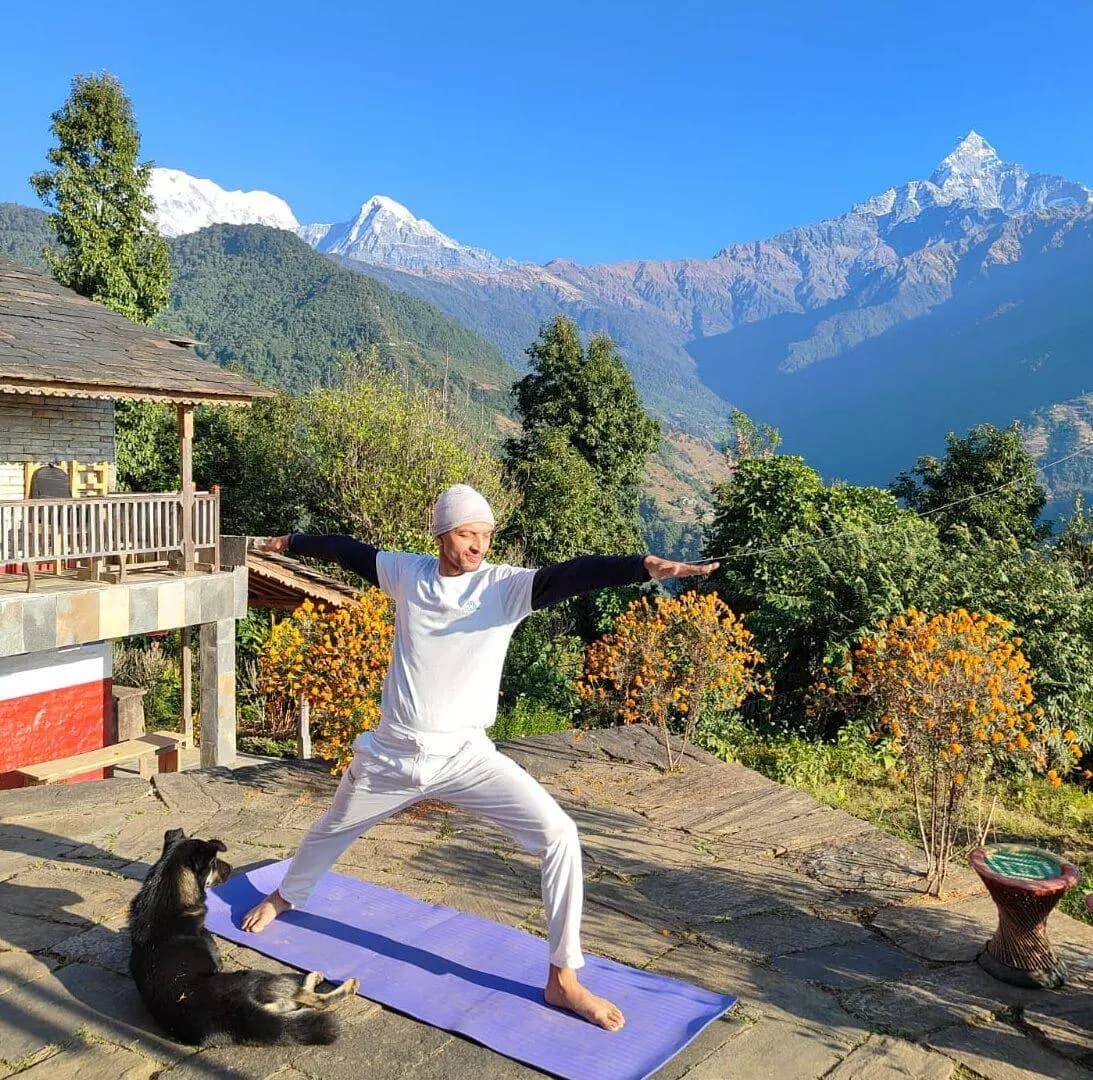
Swami AnandaSwami Ananda is the founder of Yoga in Pokhara, with over 10 years of teaching experience. Trained at ashrams in the Himalayas, he brings authentic yoga traditions to Pokhara, Nepal.
Choose Pokhara for Your YTT
Himalayan mountain energy, clean air, peaceful environment, Indian Himalayas Ashram Lineage, and exceptional value. For serious students seeking transformative training.